Song essay / Agar Tum Saath Ho · Tamasha
Why do Tara and Ved hear two different songs in “Agar Tum Saath Ho”?
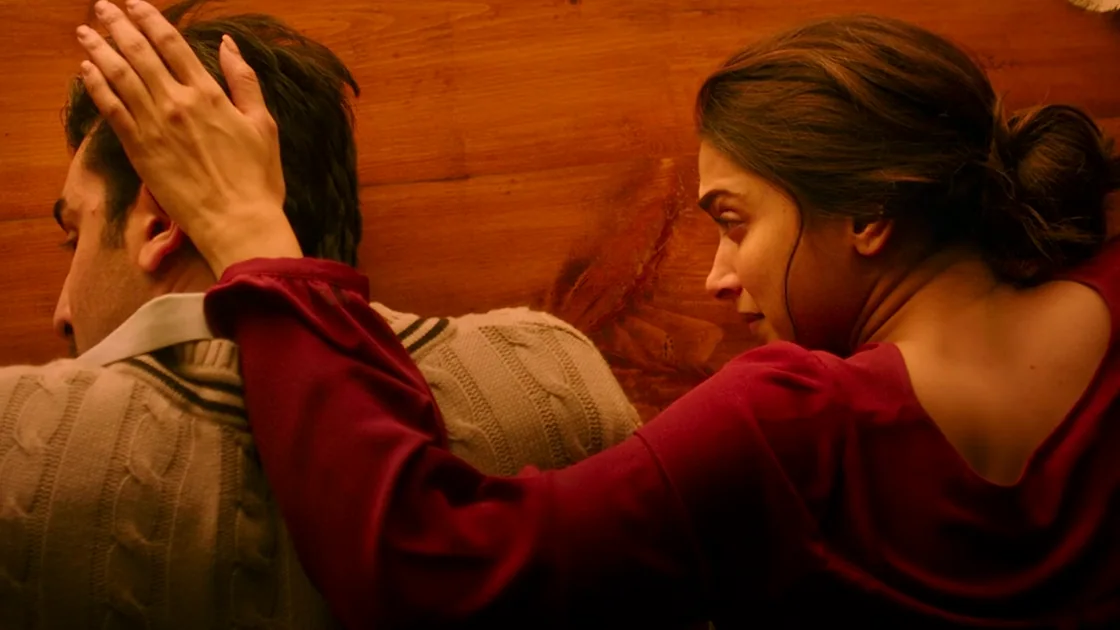
Tara taps the back of Ved’s head as though she could slow his pulse. She sings for a little more time together. Ved hears a promise he can’t believe. Listen when he answers. Arijit Singh’s voice is there twice, in two different registers.
By Abhishek Mishra · In Other Words
The joker in one half of the mirror
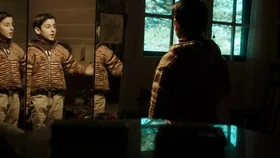
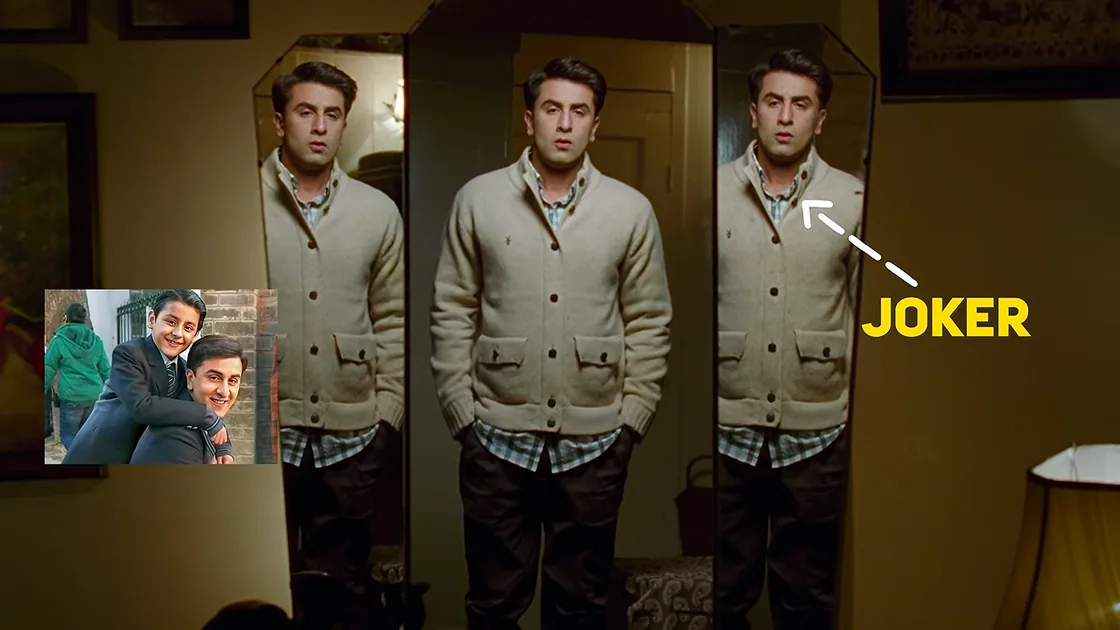
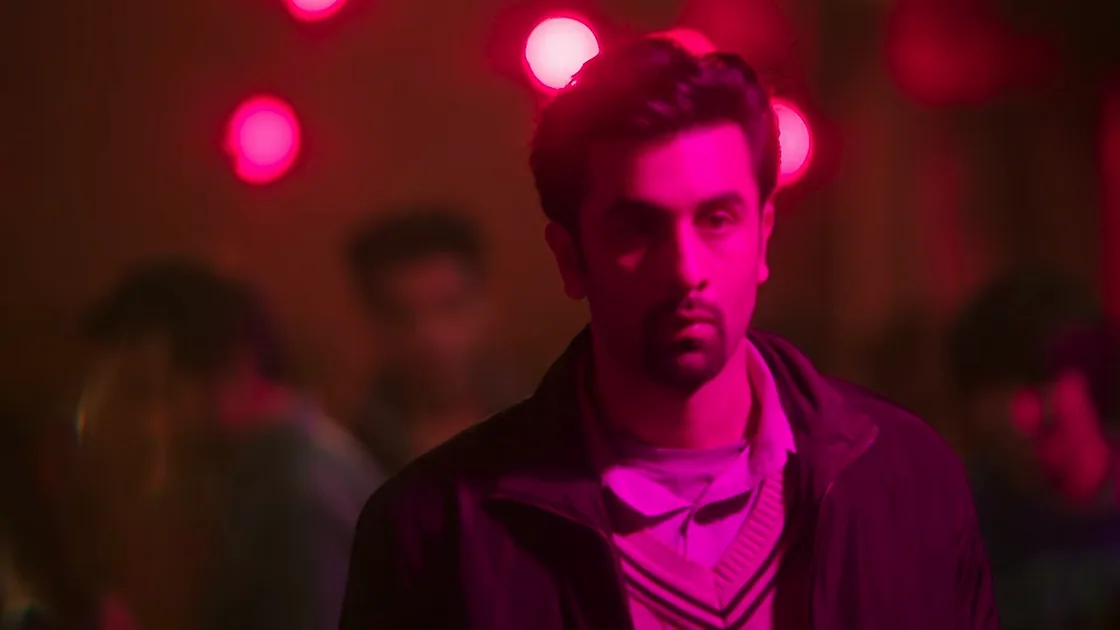
Before the café, consider the mirror. A joker occupies one side. On the other, we recognise the man who has learned to be a product manager in Delhi. Tara knows a man from Corsica who could step into a story as easily as he could walk into a room. The difficulty is that she recognises him in a man who has spent years making himself acceptable at work and at home. Even the clothes carry this argument. There’s the red tie, tied for other people, and the soft beige muffler close to his skin.
A scene waiting for its song
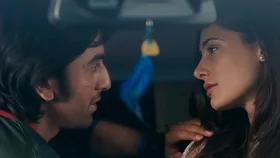
The café scene was shot before Irshad Kamil and A. R. Rahman wrote the song we hear. Try watching a little of it silently. Ved looks down. Tara takes his hand. There are other people in the room, and he can still put on an acceptable public face for them. The lyricist and composer had a peculiar opportunity. They could stand where we stand, study a movement already on the screen, and decide whose inner life it might sound like.
Watch from 3:01 ↗Tara asks for time
Tara’s opening wish is remarkably modest. Give the heart time to slow down. Let this moment stay long enough to be lived in. Her images of flowing water allow her to imagine accompanying Ved wherever he goes. His head comes to rest on the table. She puts her hand on him, and the little taps acquire something of the regularity of a pulse. There’s a tear. For a few seconds her faith in what touch can do seems entirely reasonable.
Two pitches for the same man
Ved hears quite another proposition. He distrusts the world of dreams in which Tara can see a future for them. Where she hears a river carrying them along, he hears the gulf between what people say and what actually happens. Listen to Arijit Singh’s account of the vocal in the video. Two registers were kept together. The result is a man who sounds divided even when he is the only one answering. It makes sense of the mirror without our having to see it again.
Watch from 9:24 ↗The colours of a near decision
Look at the light on the two faces as the possibility of staying together comes close and recedes. Pink and beige occupy the scene differently. For a moment Ved seems within reach of Tara’s world. Then the distance returns, though the furniture and the positions of their bodies have scarcely changed. Out in Hauz Khas, the murals offer another vocabulary for him. The Pink Floyd imagery and the mechanical skull put the man who feels like an automaton in telling company.
A gesture Ved can give back
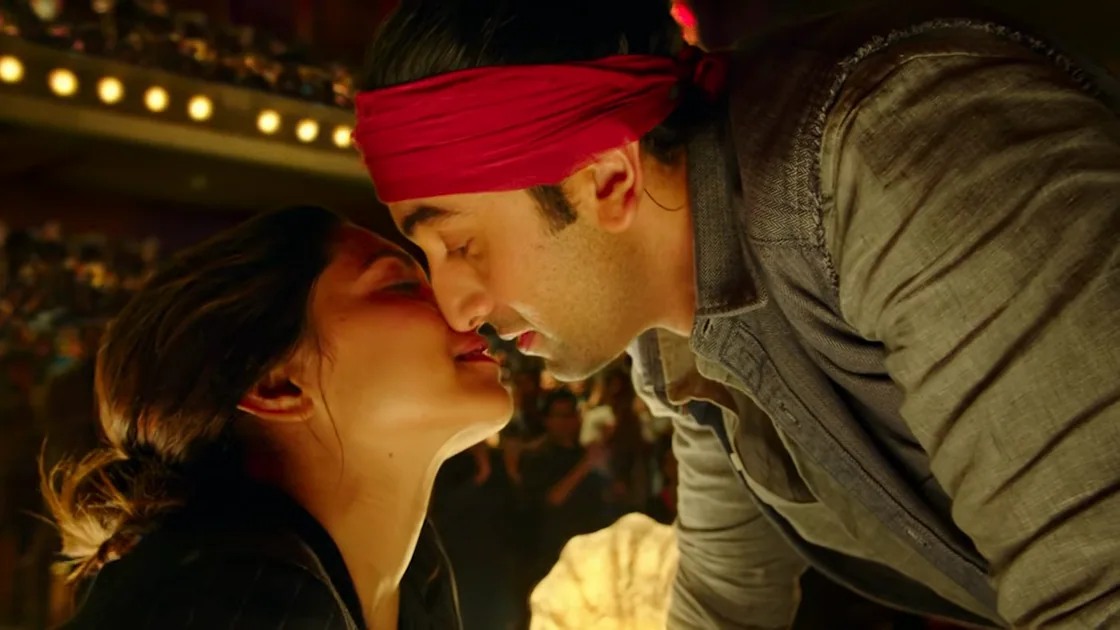
Keep the café in mind when the film returns to performance. The red bandana reappears onstage. The pose that once left Tara trying to reach Ved can now be staged again with the parts reversed. That return gives the song a life beyond the breakup. A hand on someone’s head has passed from an urgent attempt at rescue into a gesture two people can recognise. The first time we see it, only one of them knows what it means.
 Original In Other Words videoWatch the complete Agar Tum Saath Ho analysis ↗