
Masaan explained, scene by scene
Devi and Deepak spend almost the whole film without speaking to each other. Yet there’s a picture of her story on his wall and a picture of his on hers. How does Neeraj Ghaywan bring these two lives together at the Sangam?
Devi and Piyush at the lodge
A father sets down his glasses. A boy reaches back into the river for a ring. In Neeraj Ghaywan’s Banaras, it pays to watch what people do with their hands.
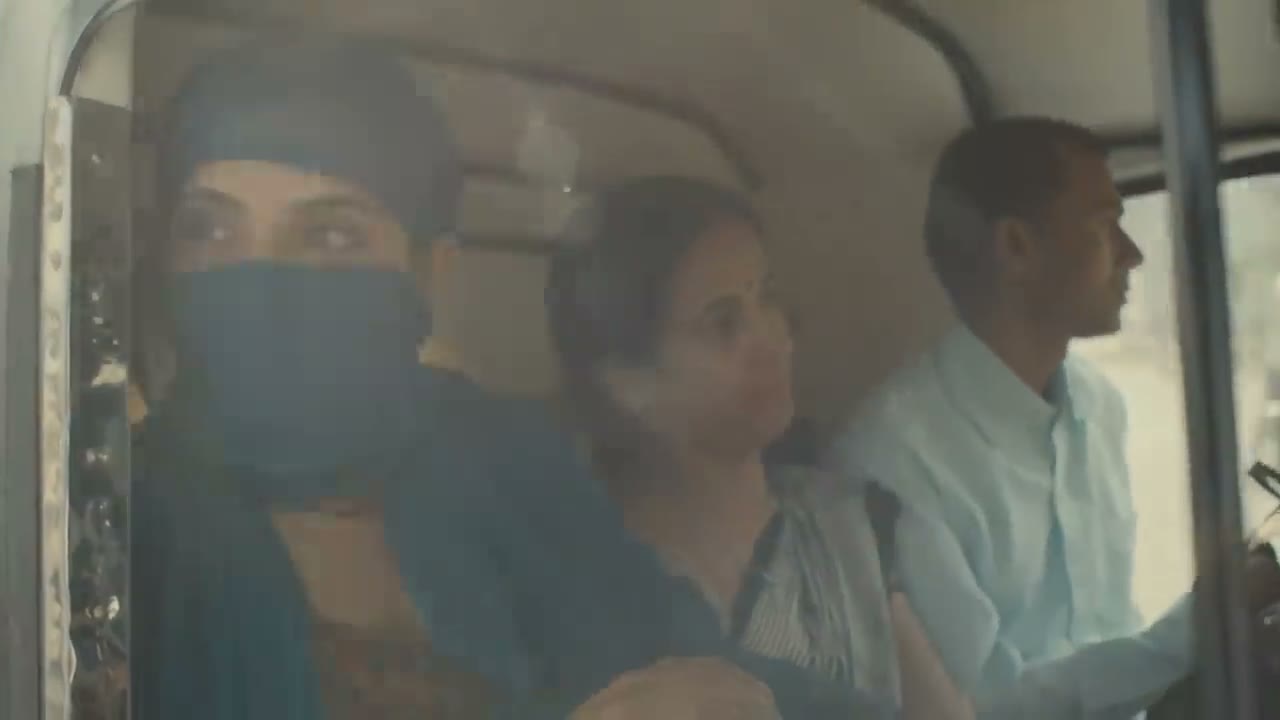
Devi remembers her phone. She nearly forgets her scarf. On her way out to meet Piyush, she goes back for it, covers her face and leaves just enough room to look out. Watch her eyes on the journey. For someone taking such care to go unseen, she wants to see absolutely everything.
Before she leaves the house, Devi has been watching porn on her computer. Ghaywan lets us in on that before anyone in Banaras has seen her with a man. It makes the next few minutes uncomfortable in a very particular way. When Deepak wants to see Shalu again, I’m already on his side. How quickly did I decide what Devi ought to do with an afternoon of her own? Frame from In Other Words · 2:25 ↗
We’ll come home by that window with her.
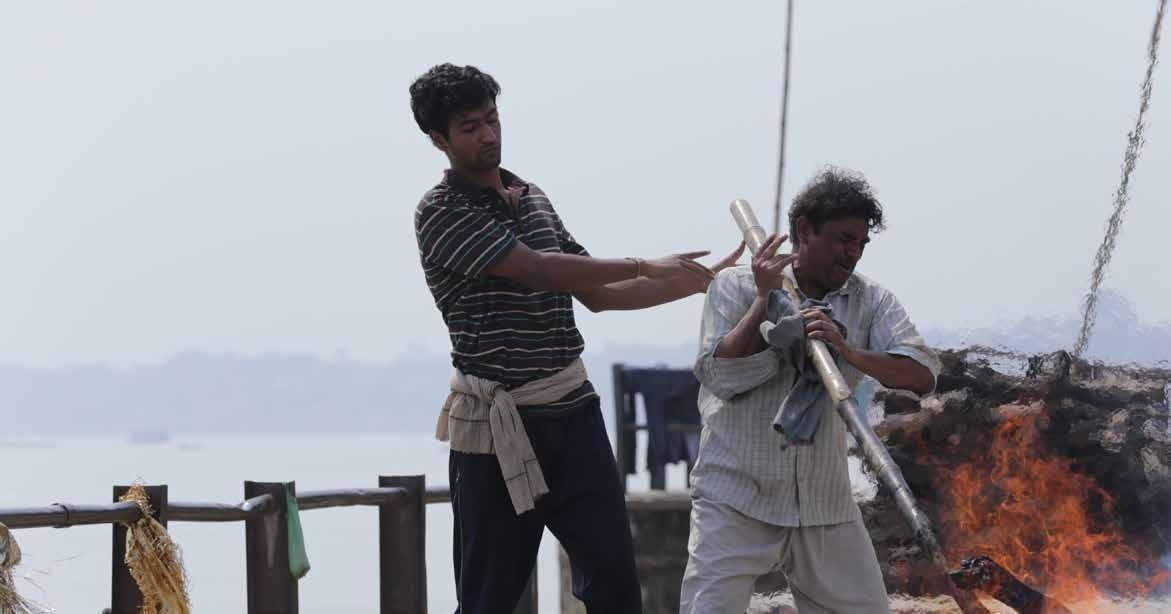
I used to wonder why this film was called Masaan. I knew the word shamshaan for a cremation ground. Then listen to Chhannulal Mishra sing about Shiva playing Holi there, with ash. In his Banaras, the word is masaan, and even here there are people with a festival to celebrate. That’s the Banaras I recognise in Neeraj Ghaywan’s film. Step a little way back from a funeral pyre and you’ll find a boy who has to get to engineering class. A young woman has plans for the afternoon. A child would like to see how the street magician did that trick.1
Varun Grover and Ghaywan spent a month in Banaras, visiting the ghats almost every day and interviewing the Dom Raja’s family. Then they had to rebuild the cremation ghat on an abandoned stretch of the riverbank. I love that detail. The place looks so thoroughly lived in that it never occurs to you somebody had to decide where a working man would put down his bamboo pole.2, 3
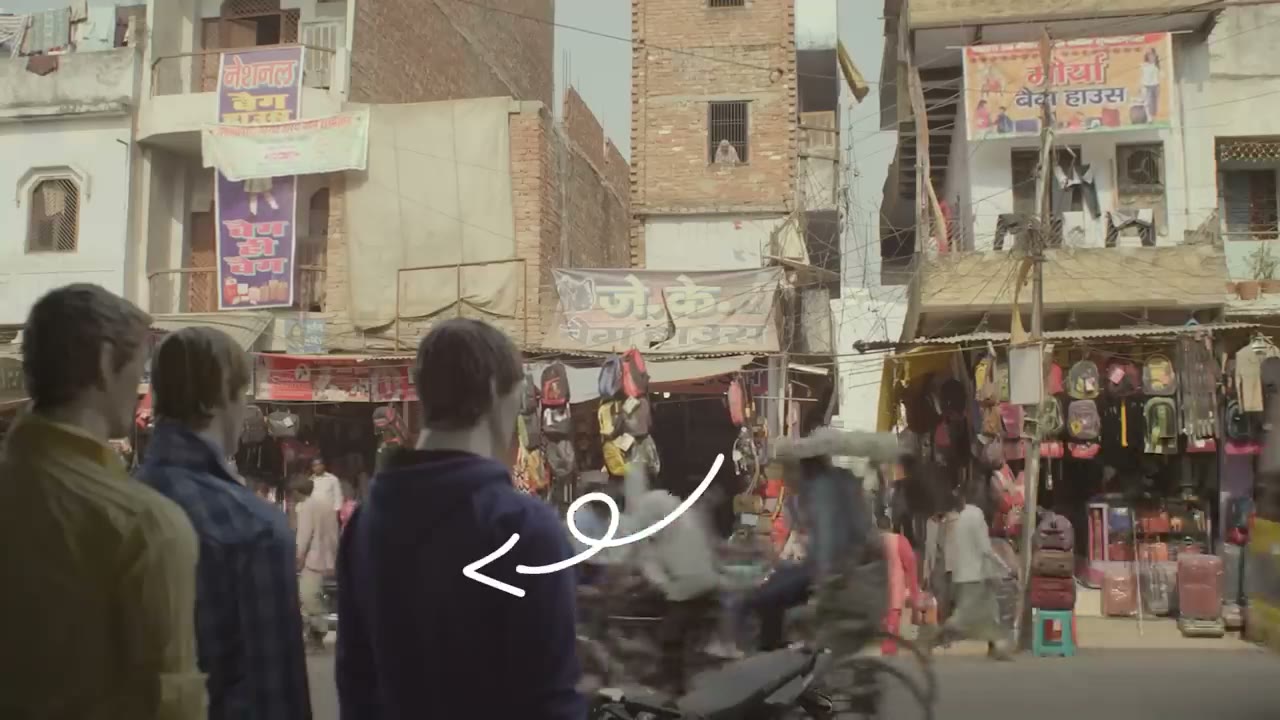
Devi’s afternoon is coming apart already. On the way to the lodge she passes three male mannequins. She barely registers them. From where we sit, three men are already watching her. At reception, a little image of a god is covered up. Upstairs, Piyush turns on the television. Of all the things that could be playing in the background of a young couple’s room, what do we hear? A report about a young man who slipped into a tiger enclosure.
Then three policemen come through the door.
After the raid, Piyush takes his own life. Much later, Devi goes to his college. His death notice is pinned to a board. Look just behind it. There’s a newspaper clipping about corruption. You could walk past that board and come away knowing a student has died. Look a second longer and there’s a suggestion of what killed him.
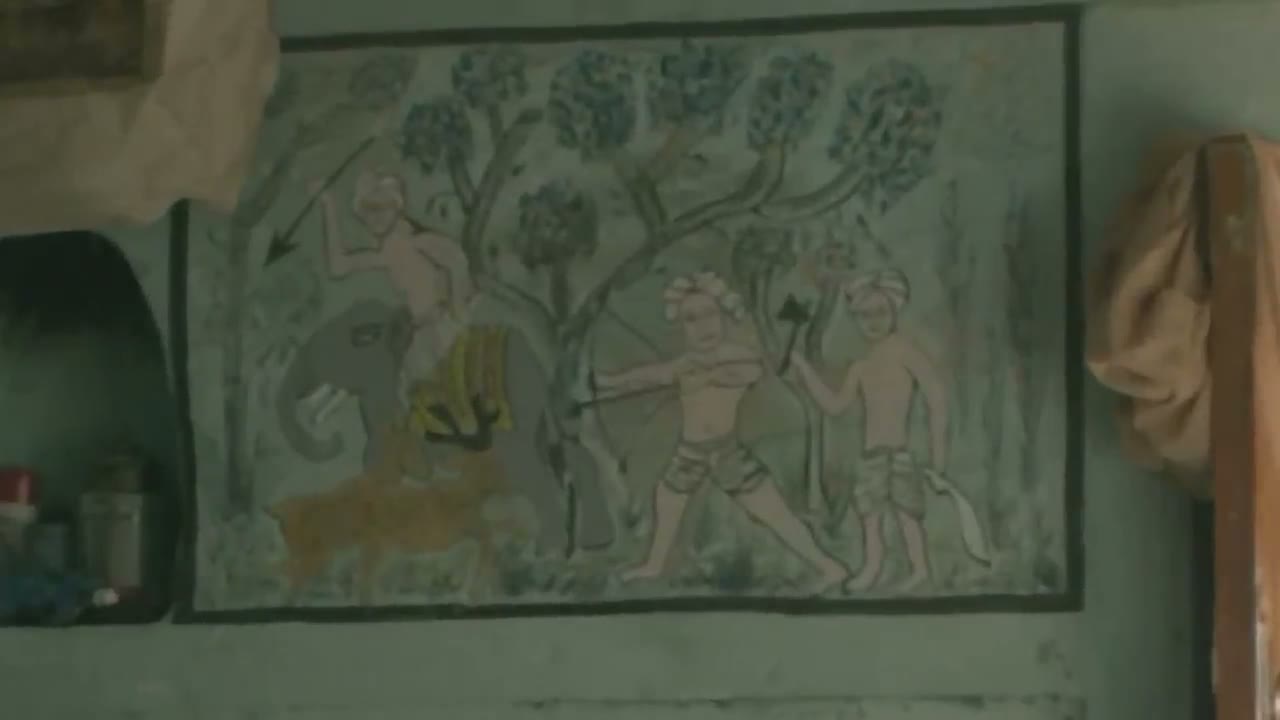
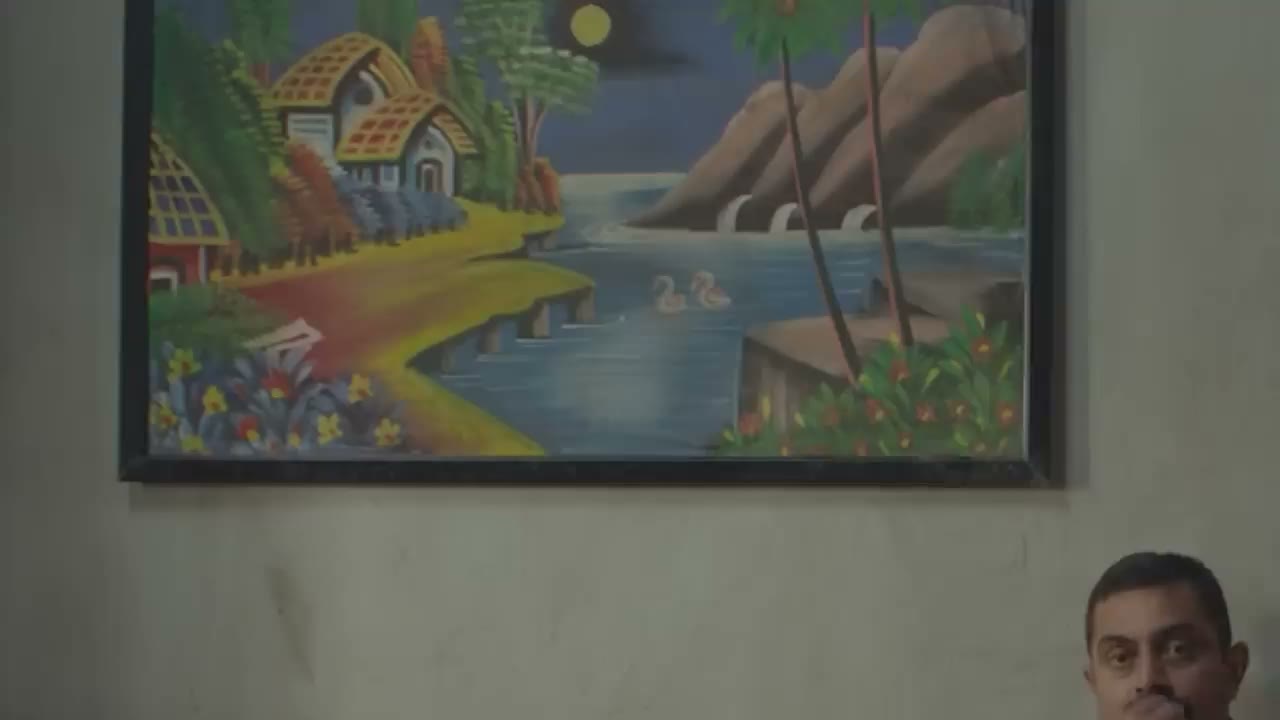
There’s an even stranger place to look for Devi and Piyush. Try Deepak’s house. In the painting on his wall, two deer have been cornered by hunters riding elephants. Then go to Devi’s house. On her wall, two birds are out on the water together. By the time Deepak and Shalu get into a boat, I feel as if I’ve already seen their picture. The lovely joke is whose house I had to visit to find it.
Who gets to record Devi?
Inspector Mishra needs Devi’s face clearly visible on his phone. There’s three lakh rupees in it for him if he can frighten her father into paying. Fine, we know what he wants. But on the way out there’s a girl filming Devi from a rooftop. What prize does she think she’s going to win?
It reminds me of those old television contests. Recognise the face, call this number, claim your reward. The horrible thing for Devi is that the game carries on after she takes another job. A man at work recognises her and thinks that entitles him to sex. She changed jobs to get away from what happened in that room. Her face got there before she did.
The price keeps changing. The cybercafé owner who catches Deepak printing a photograph of Shalu settles the moral question for twenty rupees. At the ghat, men sift the ashes for silver left on the bodies. Deepak’s family depends on that work. What unsettles me is how easily Mishra can set his own price, and how little say Deepak’s family has in what a day at the pyres is worth.
There’s another economy here. The fire that consumes a body at the ghat also keeps the hearth going in Deepak’s home. I think back to Chakbast’s opening question about what separates life from death. An answer is here in the ordinary business of getting a family fed. The police inspector can walk away from this afternoon with a profit. What would it take for Deepak’s family to walk away from the pyres? Frame from In Other Words · 6:04 ↗
Pathak’s glasses and two unfinished meals
Now bring Devi home. She has the window seat again. This time she could leave her whole face uncovered. Nobody has to tell her to lower her eyes.
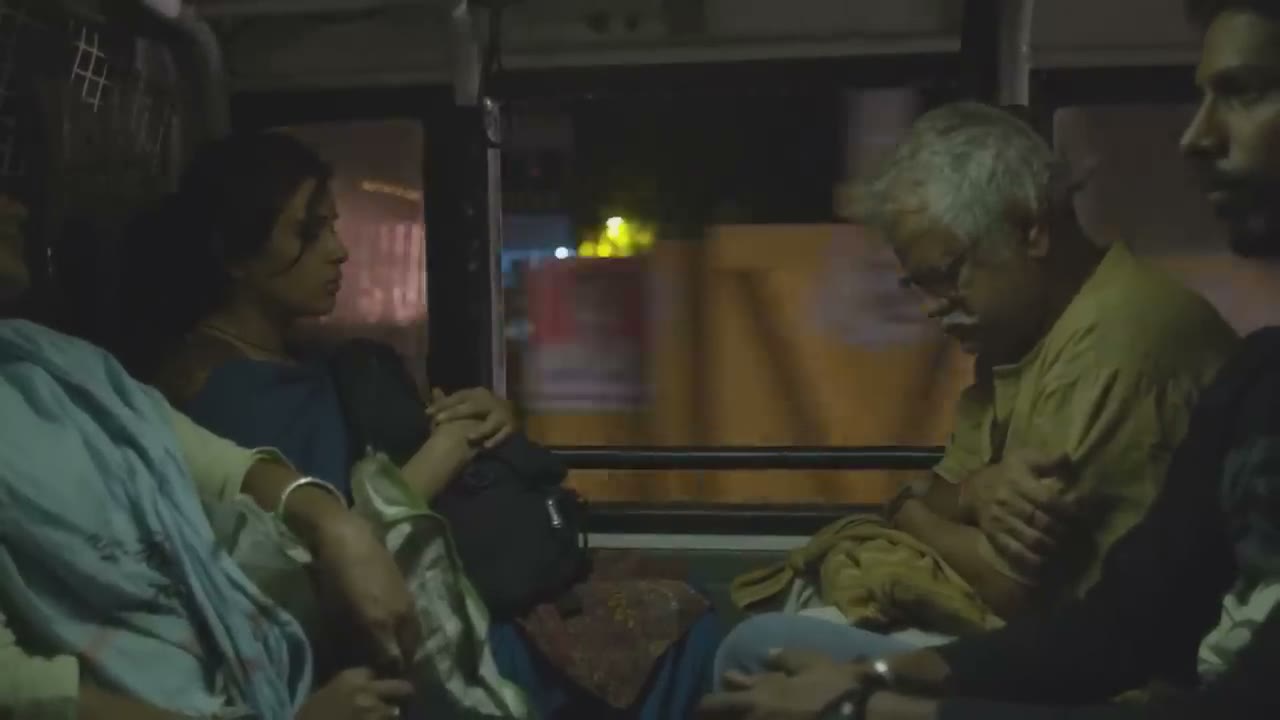
Her father sits in front of the television. His glasses are in his hands. What do you suppose he’s watching? Later, when he raises his hand to Devi, the glasses are lying on the little table. At dinner, Devi gives him water. He washes his hand right there over the food on his plate. If you’ve eaten in a house where even touching the serving spoon with the hand you’re eating with can earn you a look, you know what an extraordinary thing he’s just done. Listen to the rumble behind that meal. To me it sounds like a storm has broken inside the house.
Ghaywan modelled Pathak on a professor at Banaras Hindu University. It helps explain why this father is so painful to watch. He’s an educated man who values what his daughter can do. Get him into a police station, though, and listen to what comes out when someone asks his name. His surname. Pathak. The inspector is a Mishra. A roomful of men understands exactly how much the prospect of public disgrace is worth.3
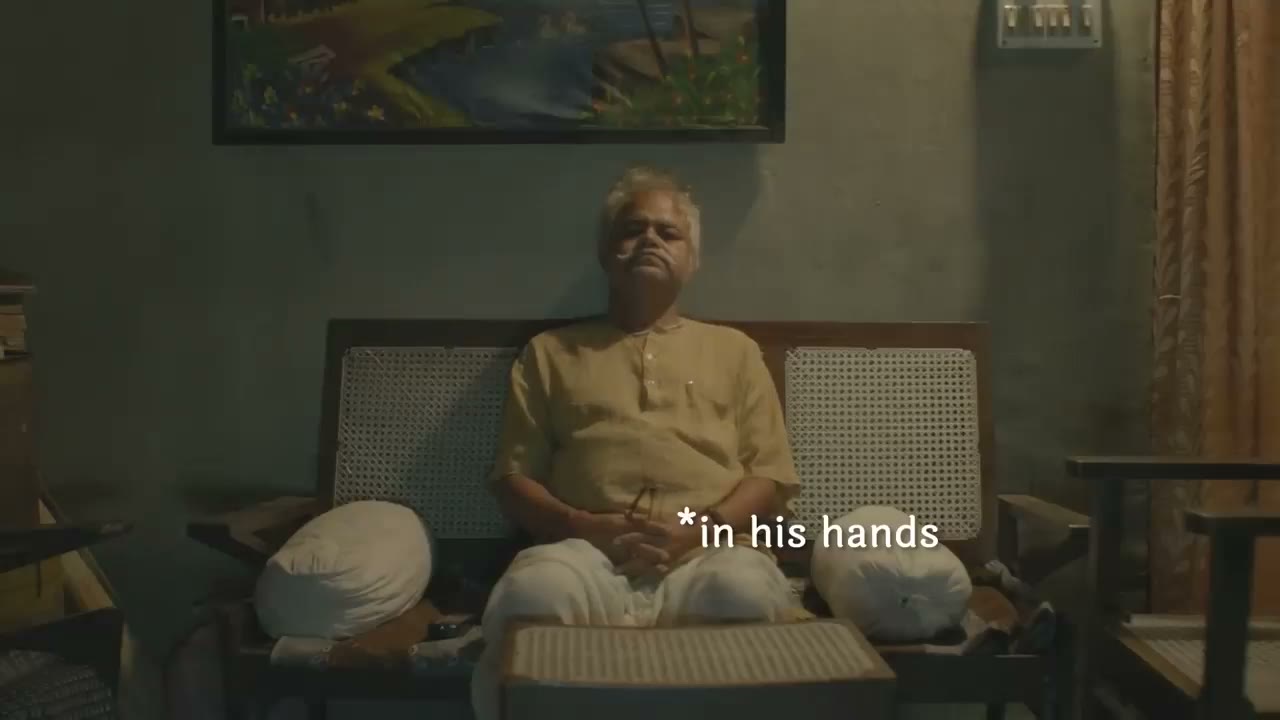
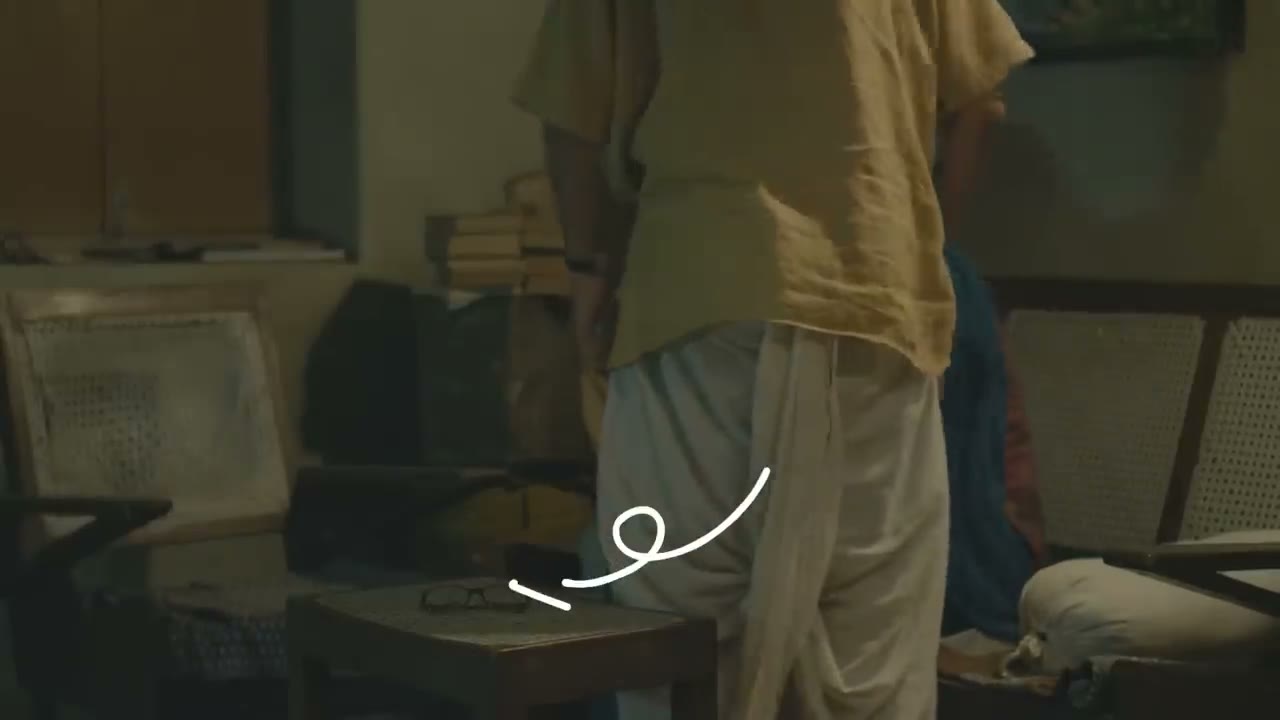
Keep an eye on those glasses whenever father and daughter speak. Sometimes they’re both in the frame and neither looks up. Even a stubborn tiffin lid becomes a little argument. Devi can’t close it. Her father takes it out of her hands and does it for her. But when she comes home having left a job that paid five and a half thousand rupees a month, watch what he does. Off come the glasses. Then he puts them on again, turns to her, and this time they manage to talk. Imagine getting that much out of a man putting his glasses back on.
Look at what happens to Devi’s colours while she’s at home. Earlier, her clothes stood out and her hair hung loose. Now there’s a shot where the cloth she’s wearing is almost the colour of the curtain behind her. A girl who went to such trouble to hide on a bus has all but disappeared in her own house. Frame from In Other Words · 9:45 ↗
In Deepak’s house, his elder brother Sikandar leaves a meal unfinished too. He’s the son who has stayed at the ghat doing the work his caste is expected to do. His younger brother has a chance to become an engineer. Whatever Sikandar might like to say about the fairness of that arrangement, the meal is sitting there getting cold. Later we’ll find out just how much of this brother’s story Ghaywan left in that small gesture.
What Deepak orders when he meets Shalu
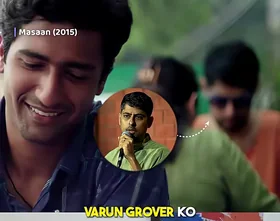
Deepak and Shalu go to a café. Pizza, cold coffee, and could he have a little chutney with that? He catches himself. Schezwan sauce, he means. I find him immensely lovable in the second it takes to make that correction. He wants to impress this girl and he knows perfectly well what he likes with his food. Both things slip out. For a bonus, look behind the couple. The man in orange is Varun Grover, who wrote the scene.
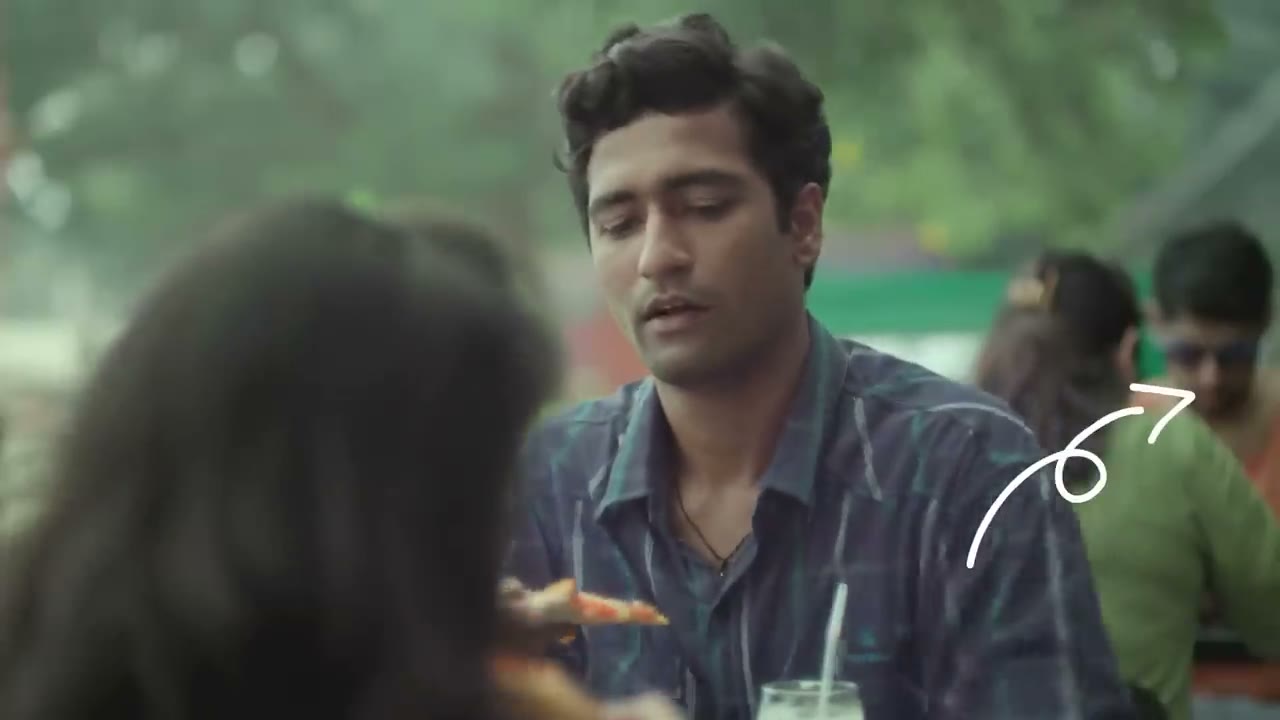
Shalu has an opinion about chutney too. She can tell the man selling bhuja, a five-rupee snack, that yesterday’s had too little garlic. Deepak has just revised his order halfway through a sentence. She remembers exactly how she likes hers and expects the seller to remember too. Listen to her there and it’s a little easier to believe the promise she’ll make him later. Frame from In Other Words · 9:05 ↗
Shalu is rather good at getting the truth out of him. She likes poetry. He can admit to her how little he’s read. She teases him that if she ever recites Chakbast to him he’s liable to faint. The audience has a head start on Deepak here. Brij Narayan Chakbast is the poet whose lines opened the film. They ask what life is, and what death is. Take the same elements, arrange them a certain way, and here is a person. Let the arrangement come apart and the elements are still here. Where did the person go? Shalu has casually dropped the opening of the film into a flirtation. Poor Deepak probably thinks he just has some reading to catch up on.4
Poetry at the fair, caste at the ghat
Before Tu Kisi Rail Si belongs to a singer, it belongs to Shalu.
She gives him Dushyant Kumar’s image of a passing train and the bridge trembling underneath it. What a choice of love poem for an engineering student. By the time the image turns up in a song at the fair, we’ve heard how it came into his life. Something similar happened to the recording he makes her. Grover knew a boy in Lucknow who courted a girl over the seven days of Durga Puja. He taped her end of their landline conversations, then put her voice between the songs on a mixtape. The two eventually married. Knowing that story, I can almost picture the work that went into the gift. How many times must he have played those conversations back, listening for the bit that belonged between two songs?2, 5
Remember Mishra insisting on a clear recording? Here’s a boy using a recording to tell a girl what her company means to him. Pankaj Sachdeva noticed how often someone in Masaan wants to keep a bit of somebody else. Even Pathak is approached by students gathering material for a project. It makes me go back to the girl on the rooftop. Who gets to play that afternoon back, and when did anyone think to ask Devi?6
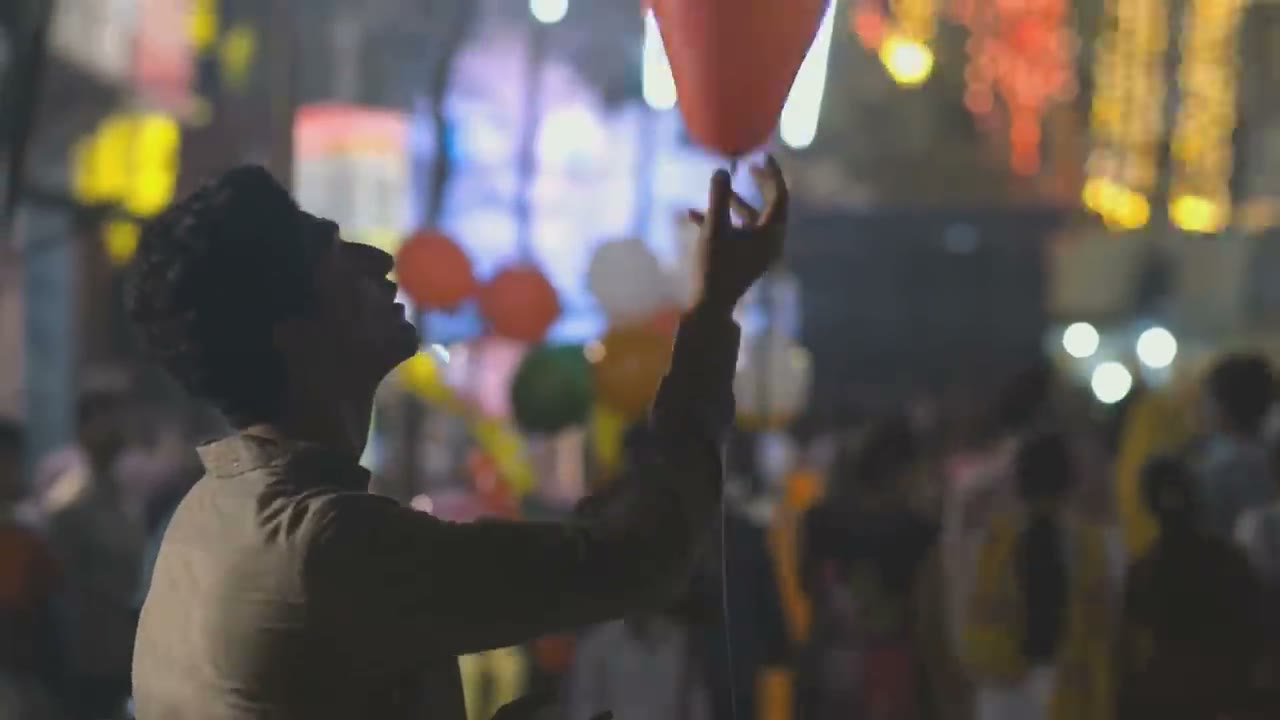
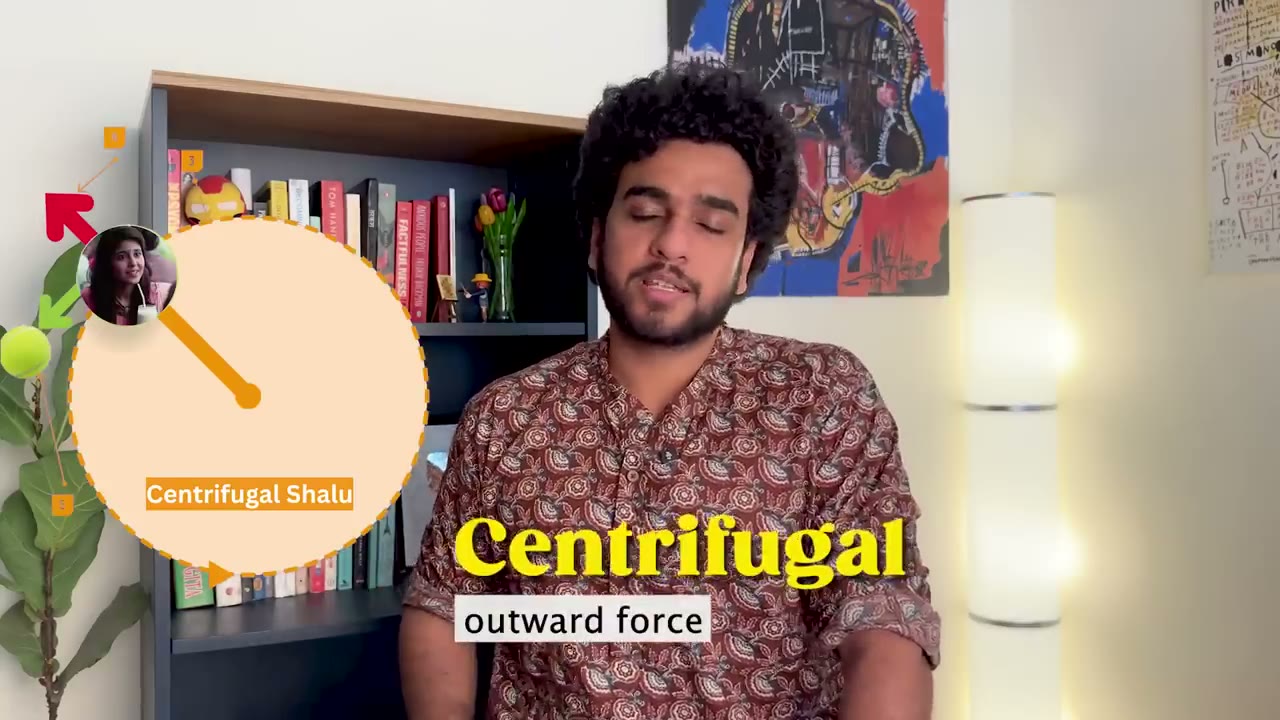
At first Deepak needs a friend to drag him over to Shalu. Give them a little time together and it takes a friend to drag him away. Even their balloons get to rise above the heads at the fair. Meanwhile, in engineering class, Deepak is learning about forces that pull you towards a centre or send you flying out from it. You can see why that lecture made it into this love story. He’s hardly able to bring himself to ask a question in class, yet here is a girl who can get him clean off the ground.
Listen to the word Shalu uses when she recites Bashir Badr. In the poem it’s charaghon, lamps you keep safe in your eyes through the long night. In her voice it’s sitaron, stars. On a first watch, Deepak has the privilege of hearing a girl he likes recite a poem. Hear it after the pyre and she seems to have left him instructions for a night neither of them knew was coming. The two travellers in the verse may meet again at a turn in the road. The film leaves Deepak those words in her voice. Read Badr’s ghazal at Rekhta · Frame from In Other Words · 11:25 ↗
Then he hears her surname. Gupta. Watch the little pause he takes. Parth Pant points out an arrangement at the ghat that helps me understand that silence. Men are sitting around having a drink. One can join in the conversation perfectly well while keeping his seat a little apart. Deepak has grown up measuring distances like that. When Shalu asks where he lives, all the anger he’s had to swallow about that distance comes out at the one person trying to cross it.7
She has her own distance to measure. Earlier she was worried about the questions her family would ask if she brought home a soft toy. Now she’s prepared to leave that house with him. And she does come to Deepak’s ghat. This is the part I find almost unbearable to put into words. The next time he sees her there, it’s his job to cremate her.
Shalu’s pyre, the ring and the lotus
Long before Shalu died, Devi followed Piyush’s body as far as she could. Go back to the way she walks behind him. There’s a funeral procession for one person, and somehow you can see a second person being carried along on her own two feet. Smoke gets between Devi and the world. At that same ghat, Deepak used to know exactly what to do with his hands. Now Shalu is on the pyre. Look at where Ghaywan puts his face in relation to the flames. It looks as though he’s been burning there with her all night.
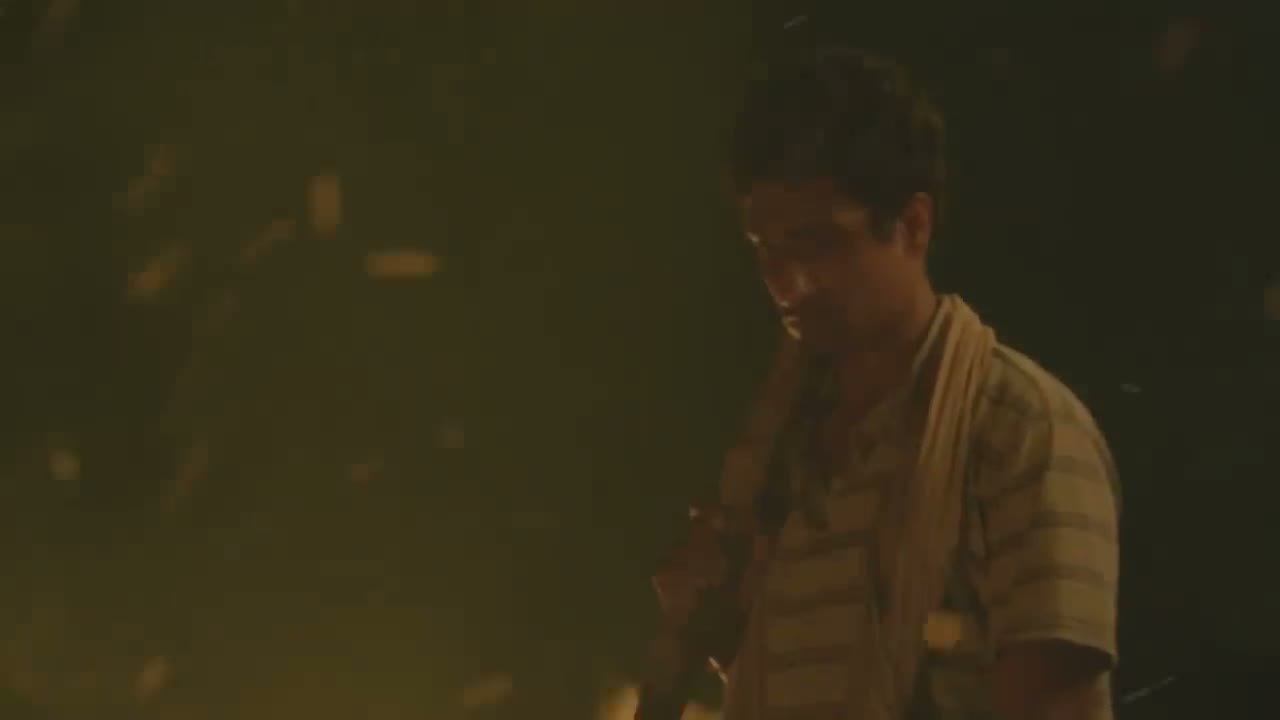
Deepak was working at the ghat when Devi followed Piyush there. She stood looking into the smoke and he had a job to do. When Shalu’s body arrives, Ghaywan puts him where Devi stood. Morning comes and the view ahead of him is still clouded. The two leads have shared a place, and now a point of view, well before they can share a conversation. Frame from In Other Words · 10:49 ↗
By morning he has Shalu’s ring. Around a fire with his friends, he manages to ask why the pain keeps going. There was once a whole argument leading up to this. Ghaywan says Deepak talked about evolution, about how human beings lost the tail and other things the body no longer needed. What possible use did the body still have for this much pain? Most of that speech went in the edit. What’s left is a young man who has run out of explanations in the company of people who love him. I think that’s why the question hurts quite so much. His friends sit there with him. What else is there to do?8
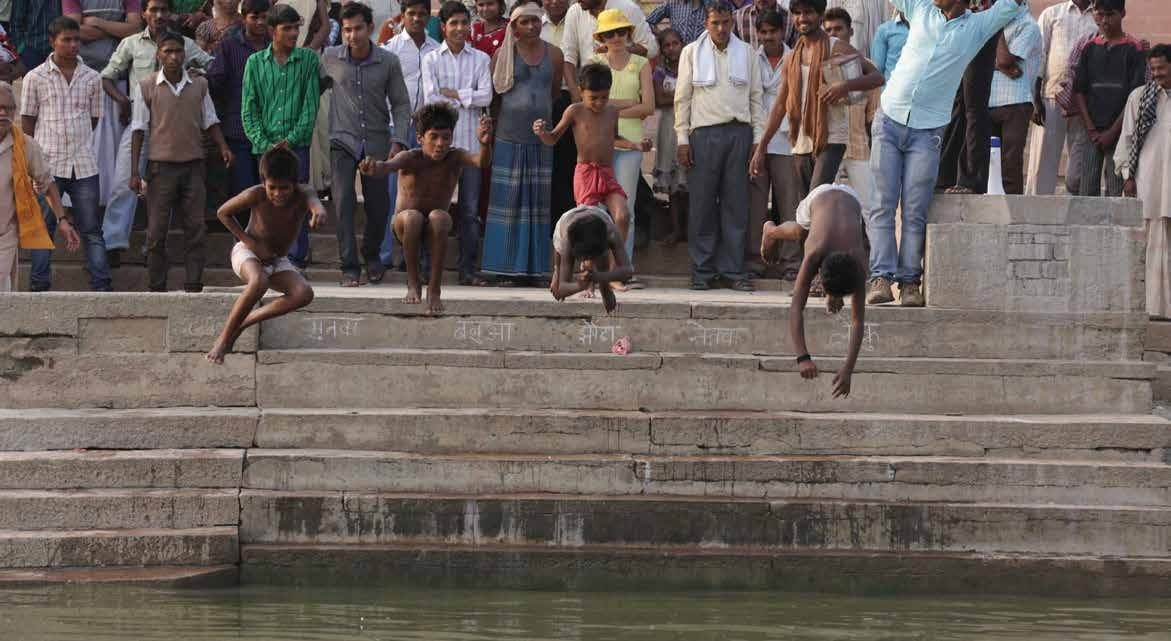
Devi has something of Piyush’s that she carries around too. A small wrapped gift can weigh an astonishing amount. When another young woman needs a ticket, Devi finds she can make a stranger feel a little of what was done to her. When Pathak needs money, he starts to look at a boy’s game differently. Down at the ghat, the children dive for coins while the men wager on who will come up with one. Jhonta knows his teacher needs him to win. Watch how much expectation the adults manage to put on a child small enough to disappear under the water.
What does Shalu’s ring mean in Masaan?
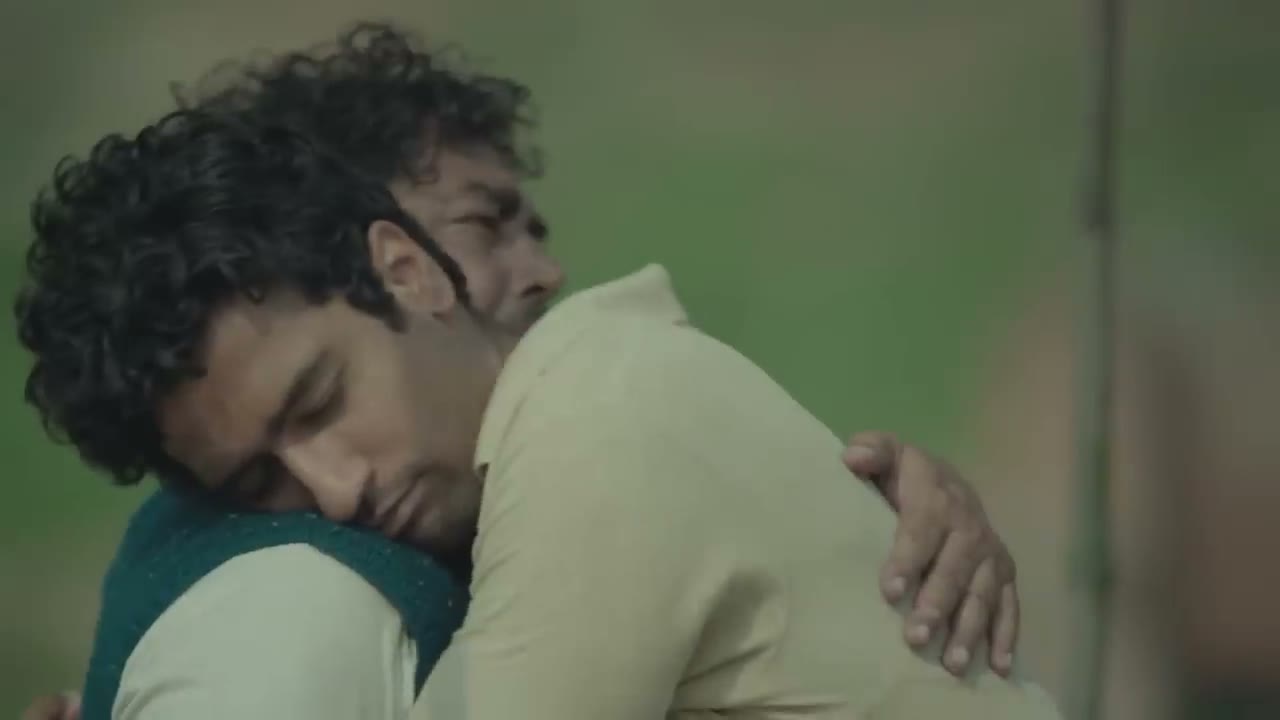
The ring gives Deepak something of Shalu’s he can still hold. My favourite bit is what happens when he throws it into the Ganga. If you ended the scene there, you could say he had decided to let her go. Just stay a few seconds longer. He jumps in after it. He wants the ring back. He looks, and he looks, and now the one thing he needs the river to do for him is give back the thing he put there himself.
I keep thinking about his hand. He’s had it in this river before, trailing it through the water with Shalu beside him. This time he’s feeling around for something small enough to fit on one of her fingers. A lotus floats past. His hand comes up empty. There’s an enormous kindness in the Ganga getting the last move here. It lets him come out of the water having loved her enough to go back in.
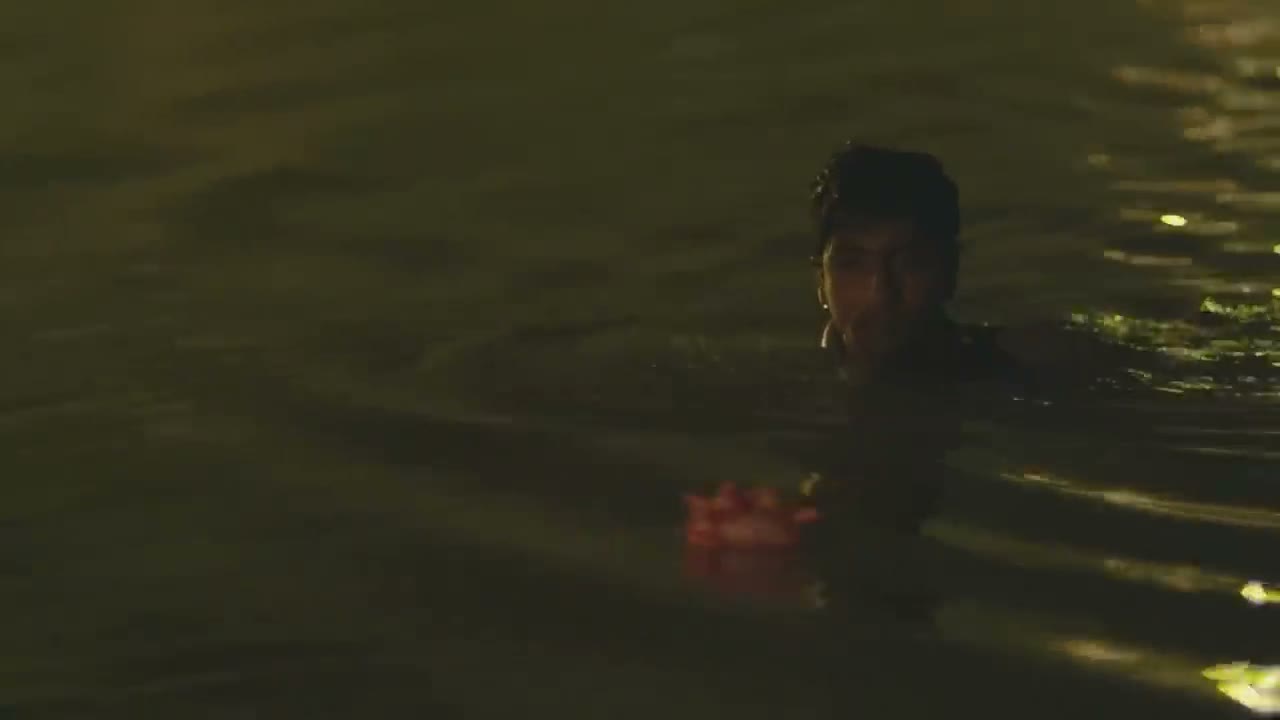
At the ghats, families give the ashes of someone they loved to the river. I see an echo of that offering in Deepak’s throw, and I read the lotus as prasad, a gift received in return. A flower held sacred grows with its roots in mud. All through his courtship Deepak has dreaded Shalu finding out where he comes from. She could look straight at what shamed him and still want a life with him. What will it take for him to look at himself that way? Frame from In Other Words · 13:55 ↗
For me, the lotus belongs with what happens the following morning. Deepak looks up. There’s sky, there are birds, and there’s his father. He goes over and holds him. Shalu could see a future for Deepak even when he was ashamed to tell her where he came from. He’ll have to learn to be that person for himself now. The first thing he does with those empty hands is put them around the man who gave him his name.
Grover drew on Kabir’s tradition for the song Mann Kasturi. Its musk deer spends its life following a fragrance that comes from its own body. You can hear why that song belongs in a film about a boy reaching into the river. And the ring has a history even he doesn’t know. In an earlier cut, Sikandar had sold family property and run away. Selling Shalu’s ring could have helped Deepak recover it. Ghaywan cut that thread so we could stay with his grief. The ring passing into the hands of a family across the water, though, goes all the way back to his original short story. Someone else was always going to find it.1, 8
What Jhonta brings home from the river
Jhonta does. He’s also been paying attention to a street magician, which means he can give Pathak a little show when he produces the ring for him. To Deepak, it was the last thing that had touched Shalu’s hand. To this boy, it’s something he can put in the hand of the man he loves and make his troubles go away. Imagine Pathak trying to thank the person it came from. Where would he even begin?
There’s a smaller gift travelling through the film that I like just as much. At the railway station, Sadhyaji shares his kheer, a sweet rice pudding, with Devi. Both of them know something about a father eating alone. That evening she makes kheer for hers. Think of the last meal we watched them have. She gave him water and he washed his hands over his dinner. Now she puts something she has made in front of him, and he can eat it. In time he’ll make her halwa himself. There’s a whole apology in the change of cook.
The lunchbox scene makes that change especially tender. In Grover’s screenplay, Devi is packing food for her father when the lid refuses to close. Late in the script she is busy packing again, this time for her own departure. Pathak comes from the kitchen carrying tea and sooji ka halwa. He has found something to do for her even as she gets ready to go. Screenplay · scenes 42 and 139
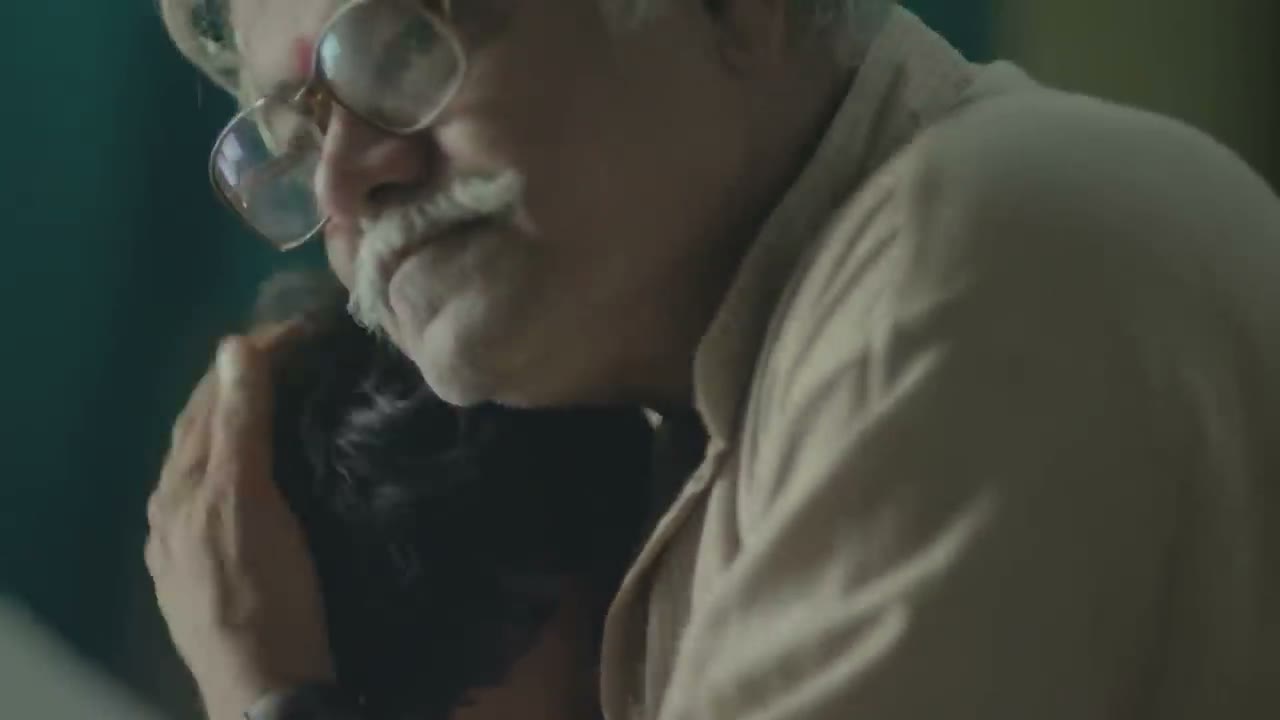
Later Pathak gathers Jhonta into his arms. Look at him now. He’s wearing his glasses.
Why Devi and Deepak meet at the Sangam
Devi still has a journey of her own to make. Grover said he wanted her to be able to find her way through this herself. Sadhyaji gets to give her a good lunch. She gets to decide what to do about Piyush. At the river she finally gives up the gift she has kept from him. I think of those two birds on the wall at home, out on the water long before she could get there.2
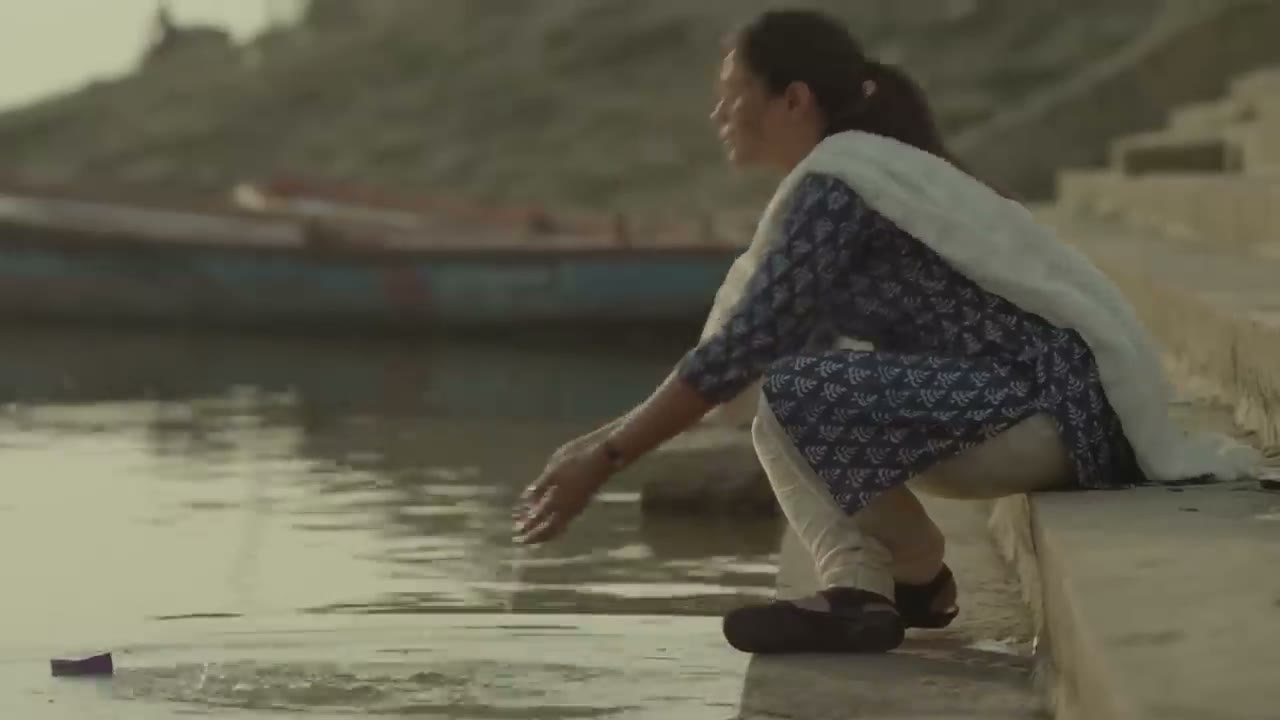
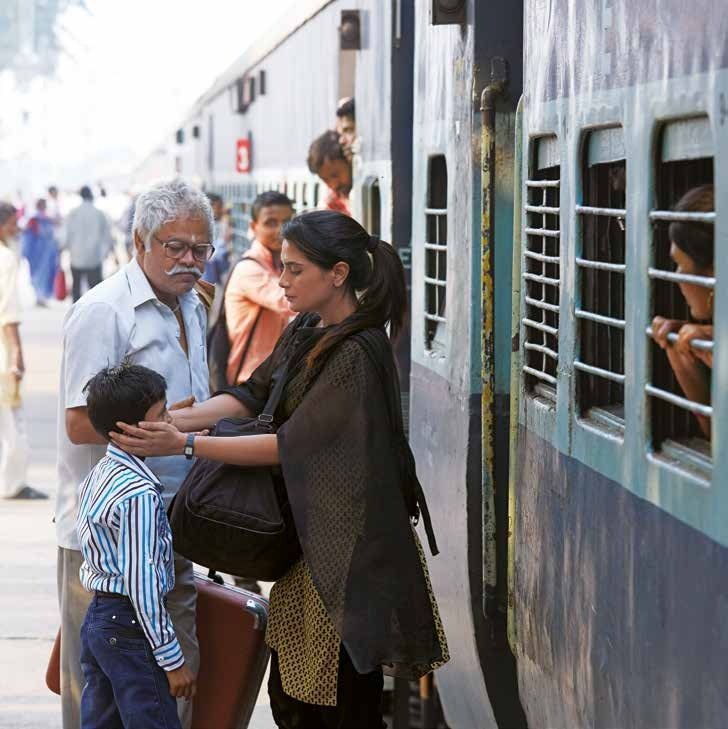
When she leaves for Allahabad, Devi gets a window again. Her face is uncovered. This time she looks out.
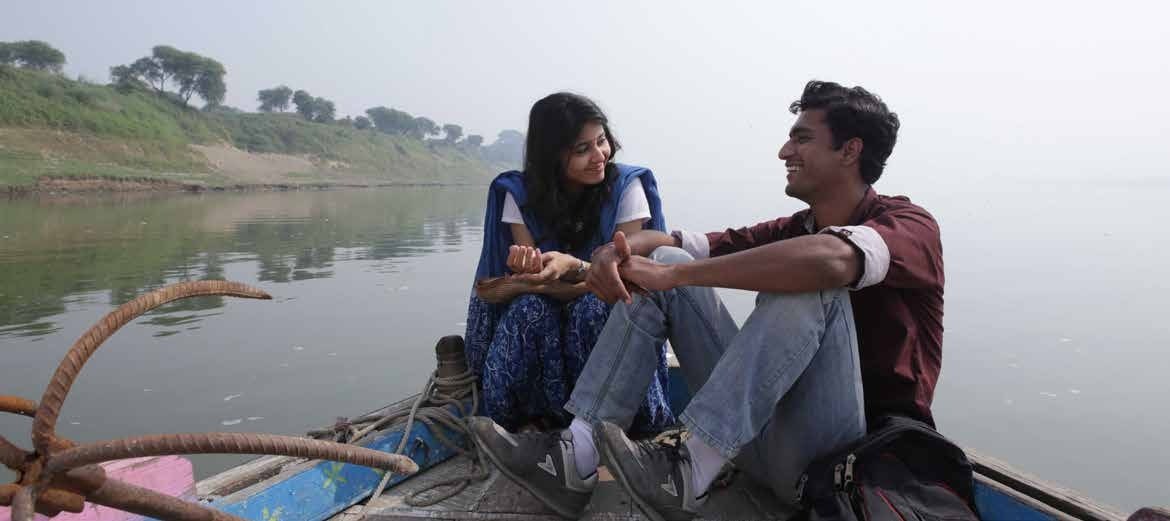
By now Devi has sold people tickets to go places and Deepak has studied how to build the bridges that take them there. When it’s their turn, a boat will do. Shalu once brought Deepak to the Sangam, the meeting of the rivers. Now he offers to take Devi. She can’t know who first showed him this place. He can’t know what it took for her to come here. We’ve spent the whole film in the company of the two people they might one day tell each other about.
Deepak passes on a little piece of advice about coming to the Sangam twice, once alone and once with someone. Devi hears it now as a suggestion for her own journey. For all the times a phone has preserved somebody’s words in this film, this is my favourite way a voice survives it. Frame from In Other Words · 15:52 ↗
Listen to what he can offer her in the meantime. There’s room in the boat. Would she like to come along?