Film essay / Thappad
Who was Amrita’s alarm clock really for?
A slap lasts a moment. A blue door, a bedsheet and two cups of tea show how long its conditions have been in the making.
By Abhishek Mishra · In Other Words
Who gets to leave the party?
Vikram has an explanation ready. He was angry about something else. Watch how far that explanation travels around the room. People who have witnessed him hit his wife can still retreat behind the idea that what happens next is a private family matter. The film has little need to replay the blow. Its witnesses carry the event out of the party in the ordinary things they feel able to do afterwards. So does Amrita.
Watch from 0:56 ↗The colour outside the front door
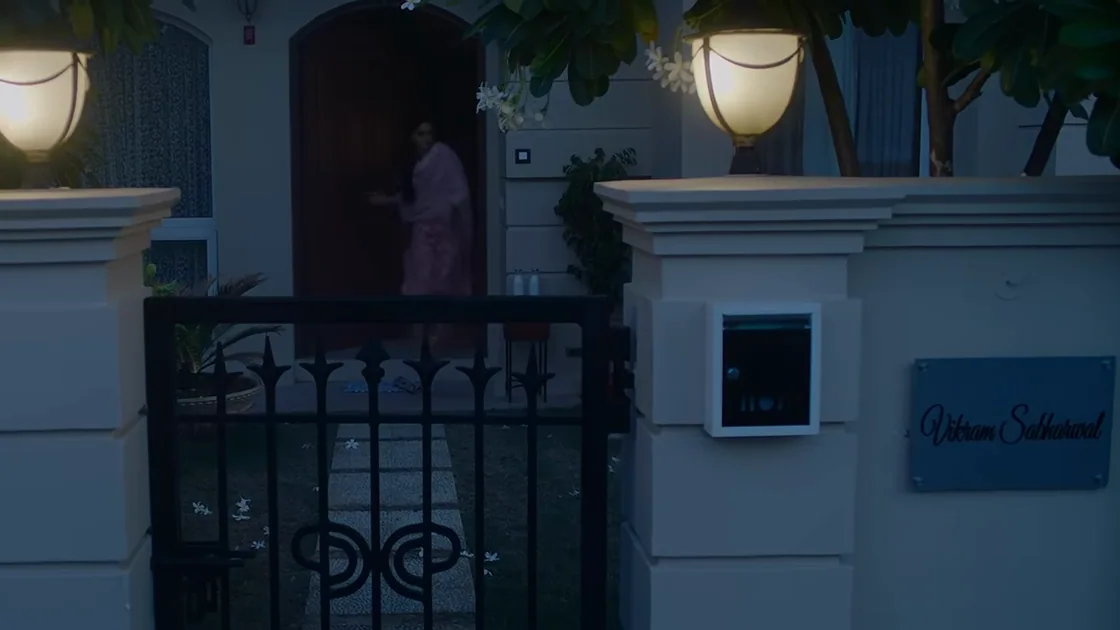
The name on the door is Vikram Sabharwal. Blue travels from the door to the walls, the shirts, even the imagined house in London. It’s easy to mistake the recurrence for a couple’s taste until Amrita tells her father that her favourite colour is yellow. Start looking for yellow when she is on the terrace or teaching dance. A colour can preserve evidence of a preference that nobody thought to ask about.
The work that used to sound like music
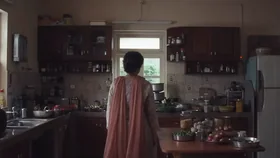
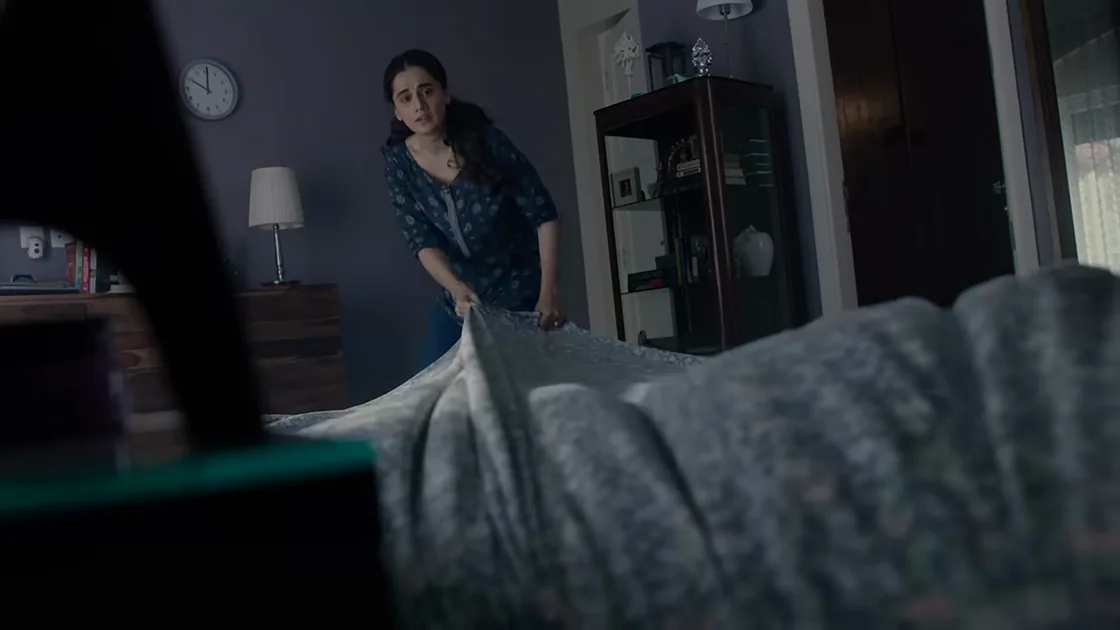
Tea, a printer, something needed from another room. Each task is small enough to ask of Amrita without interrupting the day of the person who needs it. The early morning sequence makes the work look almost musical. After the party she tries to carry on. She can repeat the notes and still hear the blow in the middle of them. When a bedsheet catches as she tries to pull it free, a routine movement finally brings her to tears.
Six o’clock in another house
At her parents’ home the alarm still goes off at six. This time Amrita can stay in bed. Her father makes tea for her. Remember the way she used to silence the clock with one hand and glance at Vikram to see whether she had woken him. Later he hands it back to her as one of her possessions. He assumes it belonged to the person who rose. The extra sleep belonged to him.
Watch from 8:33 ↗Who can find the tea leaves?
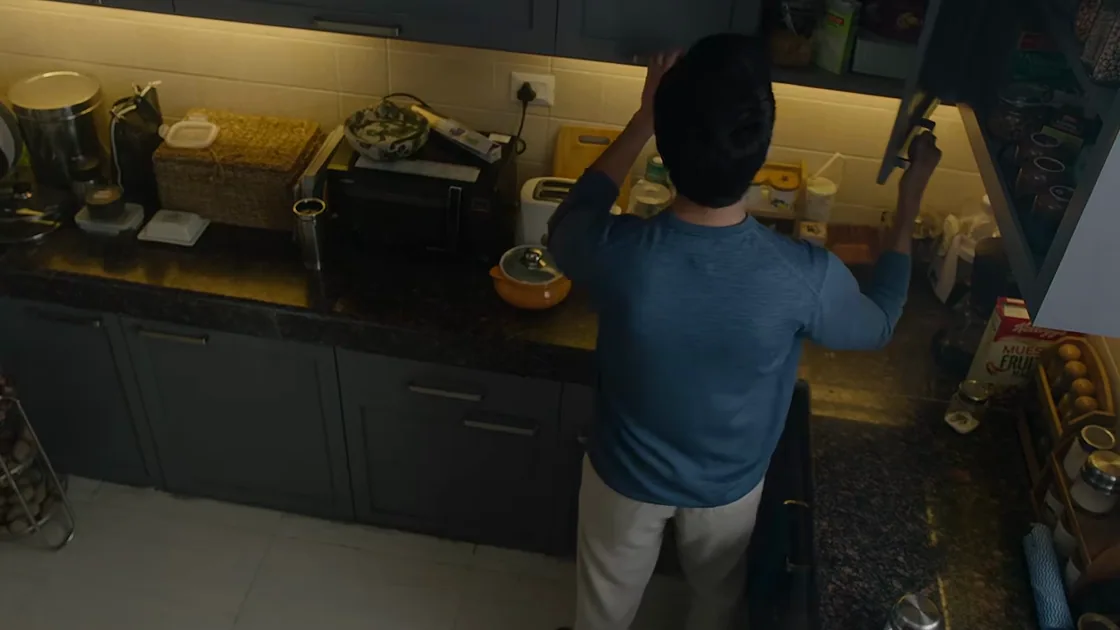
Her father has opinions about how long tea should boil, so he makes some himself. Watch Vikram alone in his own kitchen trying to find the tea and deal with the ginger and the packet. Two households, one drink, completely different assumptions about whose hands should do what. Amrita’s request for dignity is already legible in their kitchens.
What the couples do with an orange ice candy
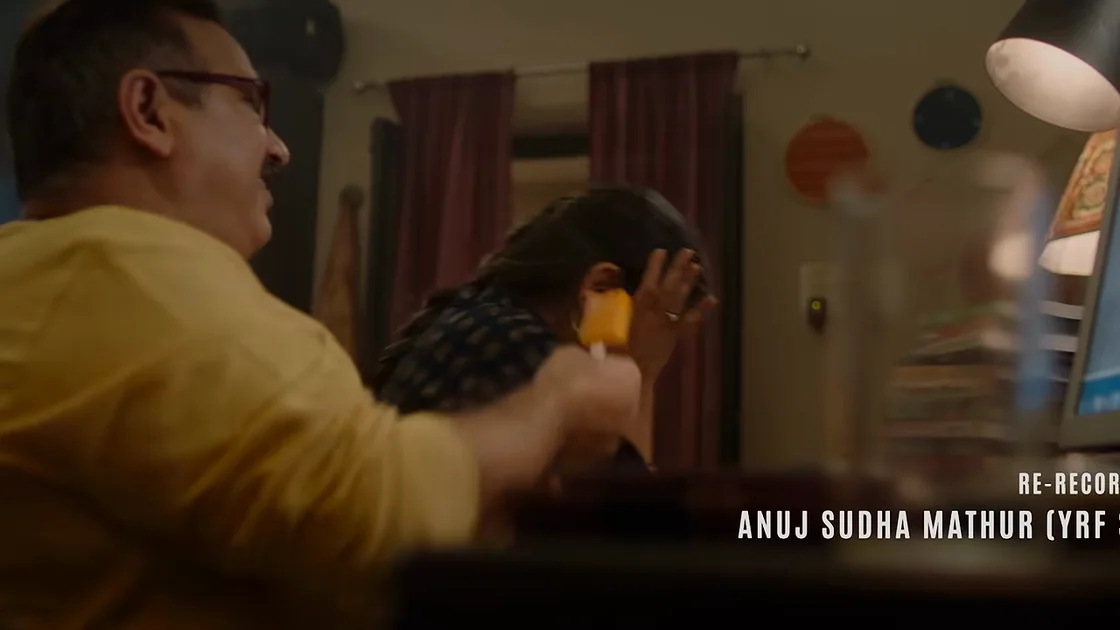
The beginning visits several couples through the same small treat. Notice who can ask for a taste, who shares easily, who has cause to hide a pleasure. The film sets those relationships beside one another before we have learned to classify anyone as liberal or conservative. Return to that orange after learning what a cup of tea costs Amrita. A household can tell you an astonishing amount about itself in the way two people handle something that cost almost nothing.
 Original In Other Words videoWatch the complete Thappad analysis ↗