
Song essay / Dama Dam Mast Qalandar
If four lamps are already burning, who brings the fifth?
There’s a place for a listener inside this qawwali. You can hear it in the drums long before the fifth lamp arrives.
By Abhishek Mishra · In Other Words
Knowing the chorus before knowing the words
Many people can join in this refrain who would struggle to translate the next line. That is an interesting place to begin listening closely. Compare the different performances gathered in the video. A phrase can have an extraordinarily long afterlife by being available to the next singer and to the person standing three rows back who knows only its rhythm. The Wadali Brothers’ performance in Coimbatore makes that invitation audible across a language boundary.

The names a listener brings to Lal
The opening invocation gives different listeners ways into the same line. Jhulelal has deep resonance in Sindhi devotion. The name of Lal Shahbaz Qalandar calls up the saint of Sehwan. The video follows the colour red through the address, then the height and freedom of the falcon in Shahbaz. These images let the singer appeal for protection while speaking with the familiarity of someone addressing a beloved friend. A single English gloss would lose much of that intimacy.
Watch from 3:24 ↗A drum you can pronounce
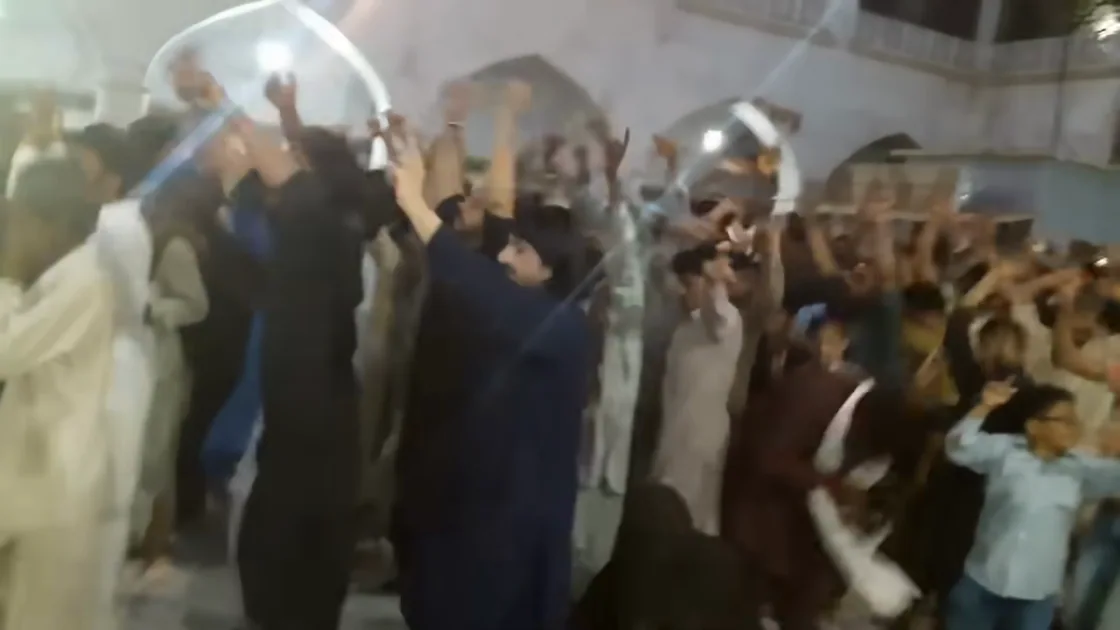
Say the opening syllables a few times without the tune. The mouth is already doing something a drum could do. Bring the percussion back and watch what the bodies in a gathering do with it. The passage on the dhamal at Sehwan gives the repetition a physical setting, including what it means for people to return and dance together after an attack on the shrine. Keeping time in company can be an act of devotion in its own right.
Four lamps and the person at the threshold
Picture four lamps casting light in four directions. There is nothing obviously missing in that picture. Then a visitor comes to light a fifth. That extra flame changes the whole relation between shrine and pilgrim. A place you approached because you needed something now seems to have been waiting for something only you could bring. Think of the empty space at the dargah in “Kun Faaya Kun”. A song about longing can make the invitation travel both ways.
What the gathering keeps sounding
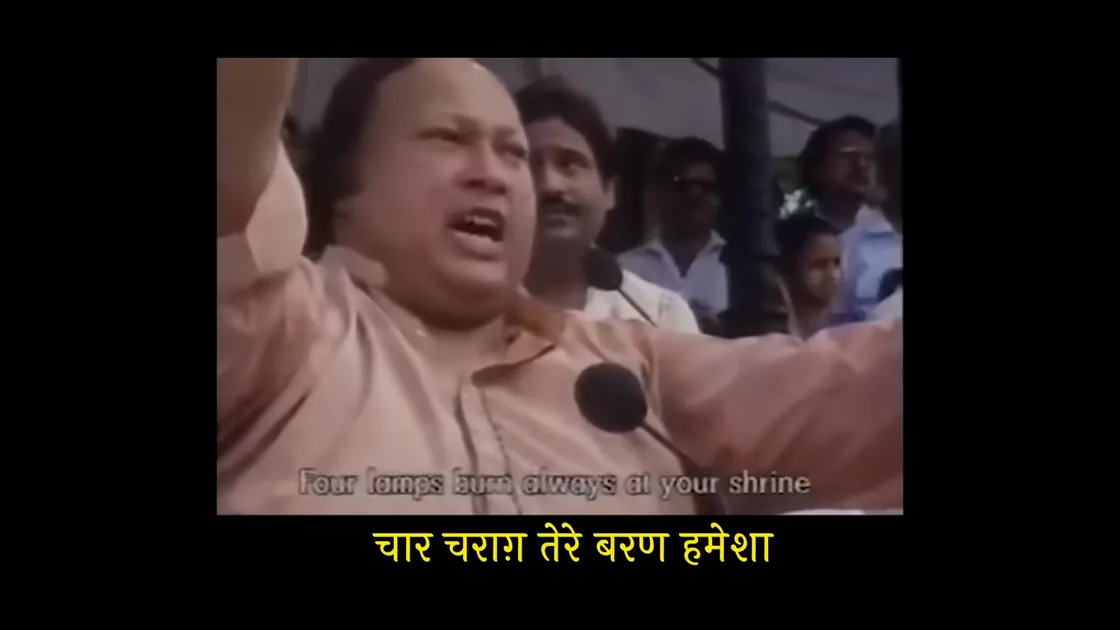
The ringing and the drums give the later lines a vocabulary for time that a gathering once heard together. Listen also for the invocations of Ali, and for the choices different performers make as the verses pass through different devotional traditions. The variations belong in the listening. Then return to the familiar chorus. Knowing who might light the next lamp changes what it feels like to be among the people answering the singer.

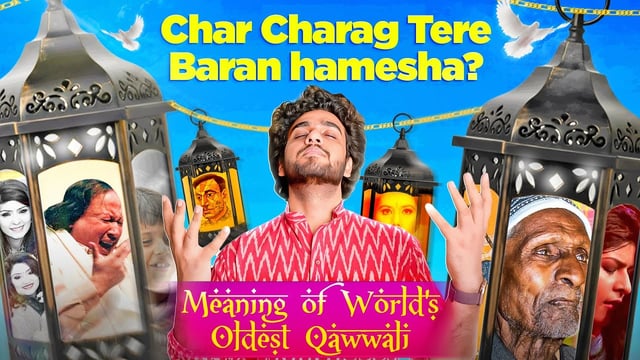 Original In Other Words videoWatch the complete Dama Dam Mast Qalandar analysis ↗