Song essay / Kun Faaya Kun · Rockstar
How does “Kun Faaya Kun” bring Jordan inside the song?
Follow the harmonium, the guitar and a shared meal through the dargah. Each changes where Janardan belongs.
By Abhishek Mishra · In Other Words
A glance nobody could order
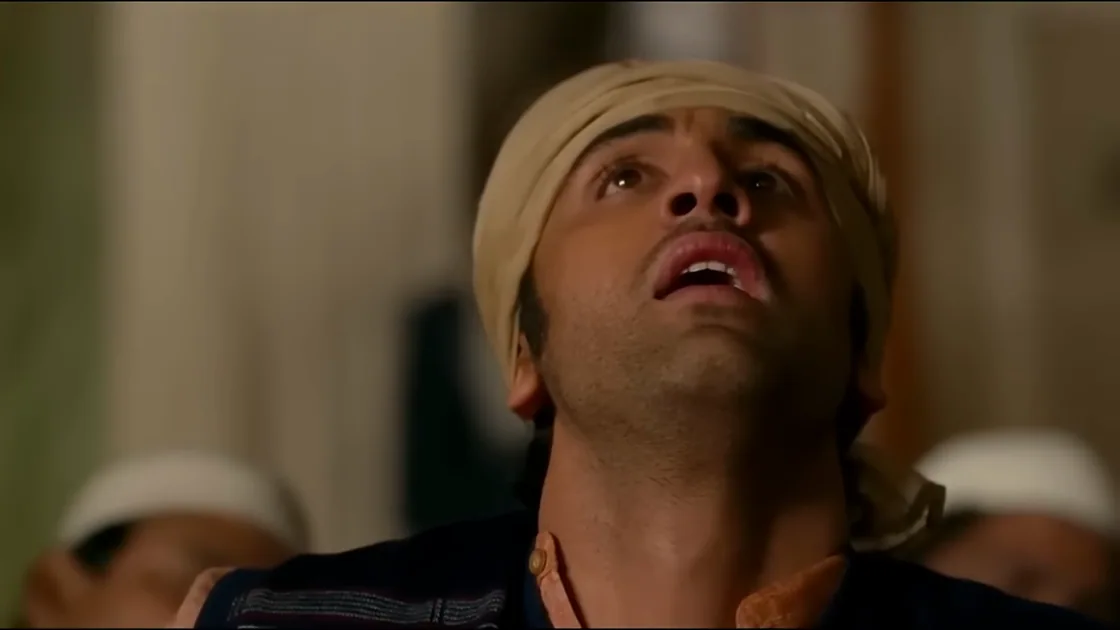
Janardan looks up in the middle of singing. Imtiaz Ali remembers a movement he could hardly have directed. Ranbir Kapoor remembers being there, singing, with the camera moving. The film has spent time with a young man trying to manufacture the conditions for great art. Here is a moment people remember precisely because nobody seems able to claim authorship of it. It’s an unusually apt way into this song.
What an empty space sounds like
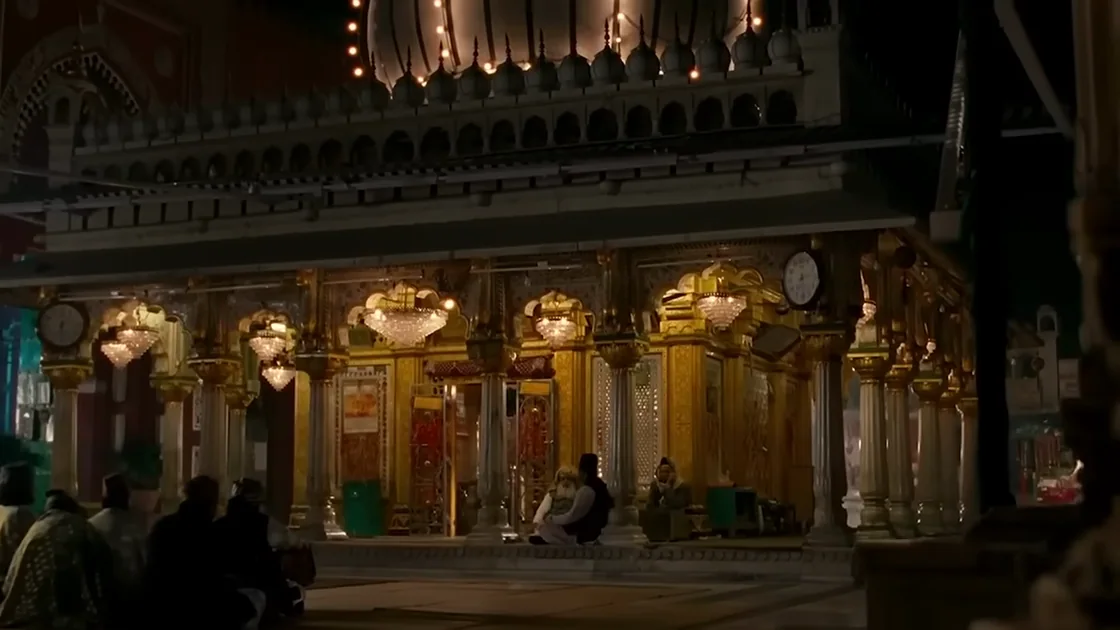
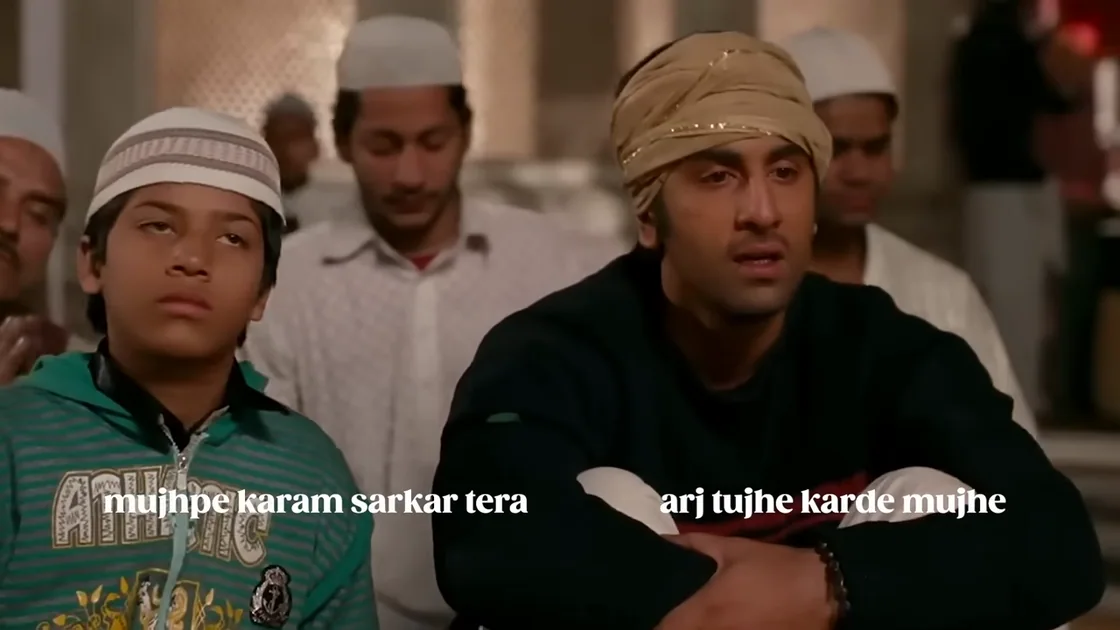
The phrase that gives the song its name carries the sense of a divine command, “Be, and it is.” Watch how gradually the film finds a visual shape for it. A descending camera reveals a shrine still being decorated. There’s space, work to do, people who already belong here. Janardan initially has very little to offer them. The cut to the harmonium gives the music a visible human source, in the same place where he has come looking for shelter.
When the dyer calls
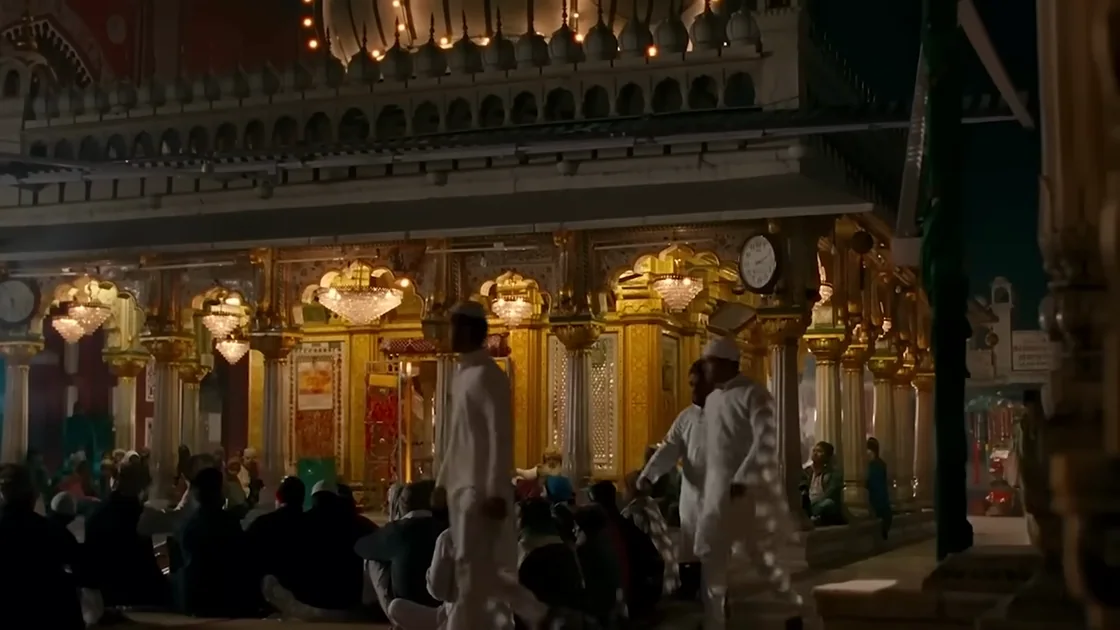
Listen for the word about emptiness against the sight of the space itself. Then comes Rangreza, the figure of the dyer. Colour is an extraordinary thing to ask for at a moment like this. Cloth doesn’t learn another tune or put on a more impressive performance. It takes colour into itself. When the camera begins to rise and the lights appear, the place we have just seen from above starts to look different to the young man inside it.
From listening to playing
Notice the order. First he joins the singers. Later the guitar is in his hands. The instrument he once carried as proof of the kind of star he wanted to become can do something humbler here. It can accompany other voices. The images of a drop, fire and rain make it possible to hear the individual against something much larger. His sound can remain distinct without having to be the largest sound in the room.
Watch from 7:52 ↗Who gives him food, and what he takes away
The change becomes ordinary enough to eat. Food and tea are shared. The boy who arrived outside the gathering receives something from within it. By the time the song asks for release from the self, even the guitar can disappear from his hands. He will carry it again when he leaves. It is the same object, yet he has learned what it feels like to sing without the whole performance having to prove who he is.
 Original In Other Words videoWatch the complete Kun Faaya Kun analysis ↗