Film essay / Irrfan Khan
What is Irrfan doing in the pause before a line?
An untouched cup in Maqbool, a borrowed phone and a delayed reply in Piku help explain why it felt as if we knew him.
By Abhishek Mishra · In Other Words
The moment the news interrupts
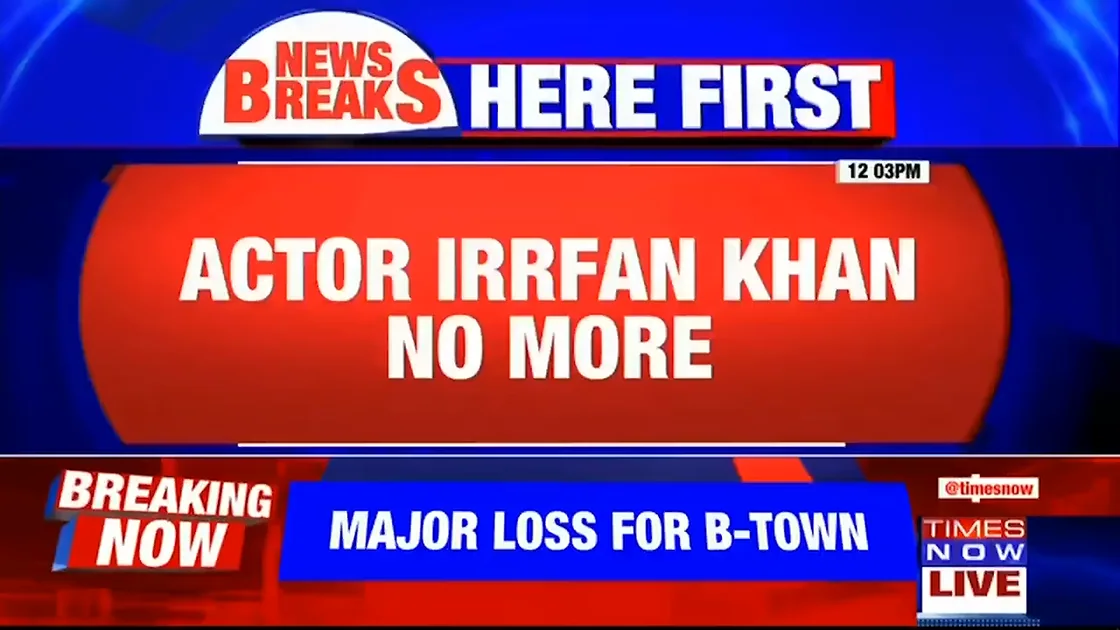
First come the voices of people who loved Irrfan, speaking as though he might still come back. It is surprisingly easy to join them. Then a bulletin takes away the possibility the edit has briefly allowed us to entertain. What is it about the work of an actor that makes a stranger willing to believe, even for a moment, that somebody from his own life is missing? The answer is easiest to find in the gestures he could have left out.
A person thinking in front of the camera
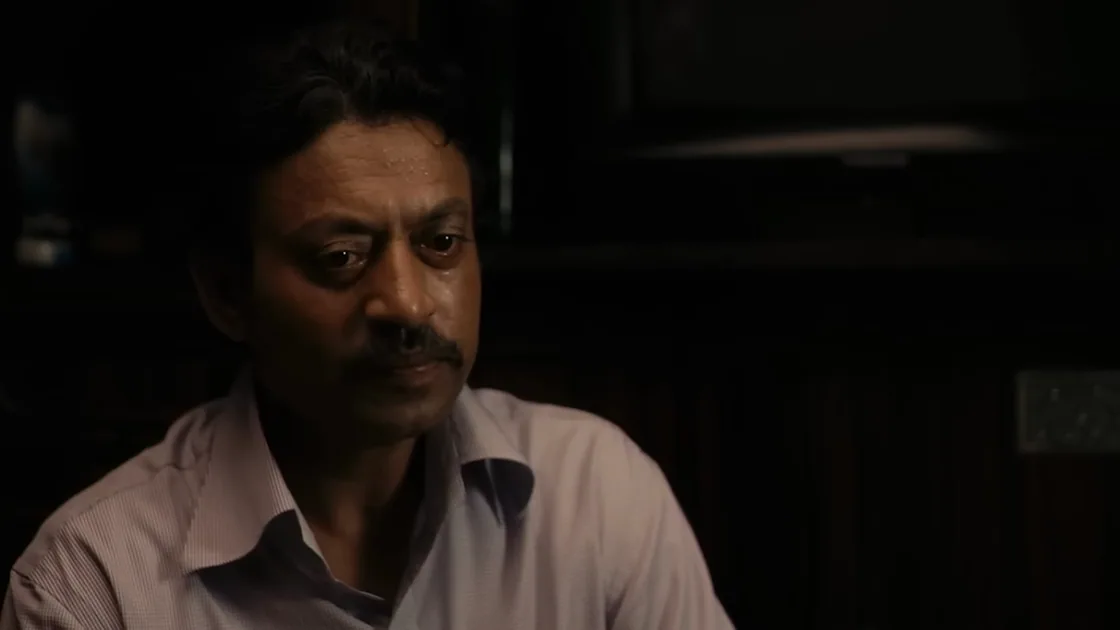
Irrfan talks about acting as something closer to a conversation with a character than the business of reproducing a set of outward habits. You can see how much room this leaves for discovery. Watch his eyes when he is asked a question. People working out an answer often look away before they return to the face of the person who asked. He gives that stretch of time a place within the performance. We get to wait for a thought alongside him.
Watch from 4:46 ↗The cup Maqbool doesn’t drink
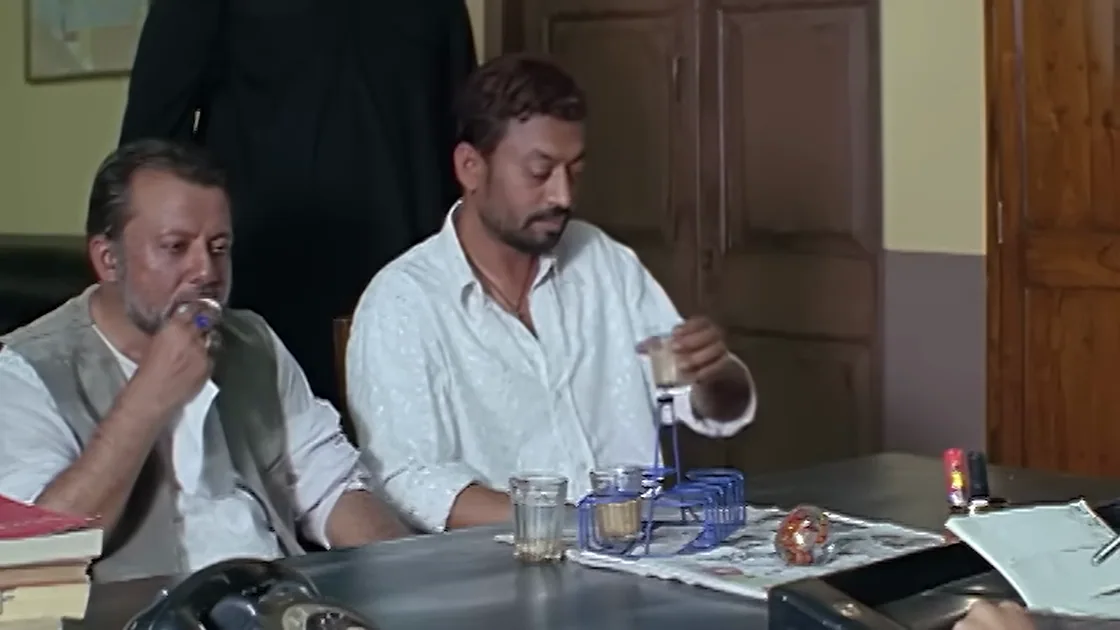
Maqbool has been publicly slapped and cannot act on the anger. At the police station he takes a seat without asking. Then Abbaji arrives and his body rearranges itself around the new balance of power. Abbaji takes tea. Maqbool lifts a cup too. Watch for the sip that never comes. Within one small social ritual Irrfan has found room for a show of authority, a reflex of submission and the anger that has survived both.
How long does it take to say a name?
In one scene a father’s pride in his son coexists with the knowledge that he may be seeing him for the last time. In another, Nawazuddin’s character asks for the name of a girlfriend. Before Irrfan answers, watch how many questions seem to pass behind his eyes. What have I told you? What was that relationship to me? How much of it do I want to give away? By the time the name comes, the pause has already done the work.
A phone in Qarib Qarib Singlle and a quarrel in Piku
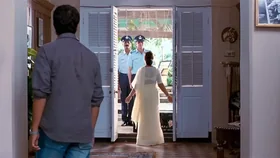
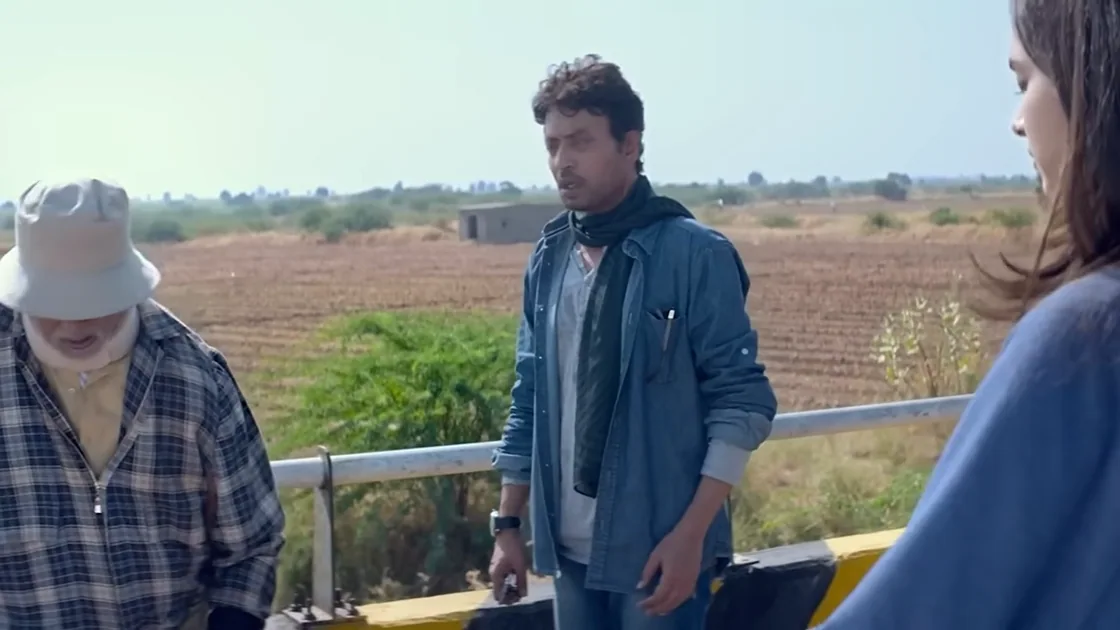
Borrow somebody else’s phone and the screen often seems to respond differently. Irrfan lets that tiny irritation intrude into a scene without making a performance of the joke. In Piku, listen to the argument about throwing away a knife. He carries on with his thought, registers a remark made a moment earlier, then doubles back to answer it. Real arguments have that untidy delay. It takes considerable confidence to let a line land late.
What we miss when the bulletin returns
It’s tempting to describe what we have lost by listing the films. Paan Singh Tomar. Life of Pi. A comedy and then a part nothing like it. The smaller inventory is harder to replace. A cup left full, a thought visible before it is spoken, a reply arriving in its own time. Those things made us feel we had spent time with a person. They explain why the wish at the beginning could briefly feel so plausible.
Watch from 9:42 ↗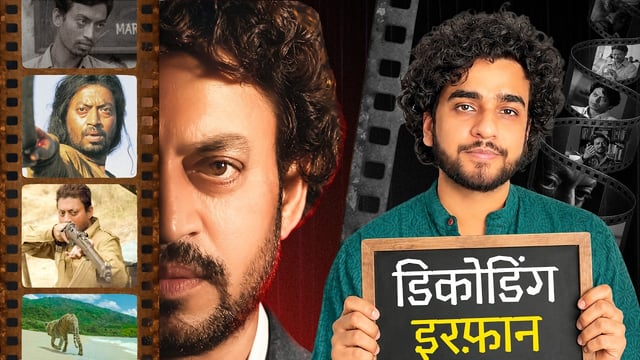 Original In Other Words videoWatch the complete Irrfan Khan analysis ↗