
Song essay / Lukka Chuppi · Rang De Basanti
Where does Ajay’s voice go at the end of “Lukka Chuppi”?
A mother waits at a familiar turn in the road. Her son answers from somewhere she can’t follow. Listen to their final notes.
By Abhishek Mishra · In Other Words
A phone call interrupts the recording
A mother calls while her son is trying to record a video about a mother calling her son. For a few seconds you hear the ordinary negotiation about whether to call later. Usually that exchange carries an unspoken certainty. There will be a later. “Lukka Chuppi” takes a childhood game built on the same certainty and stretches out the waiting. A child who hides is supposed to come when his mother has had enough.
Watch from 0:04 ↗How long is an evening for a mother?
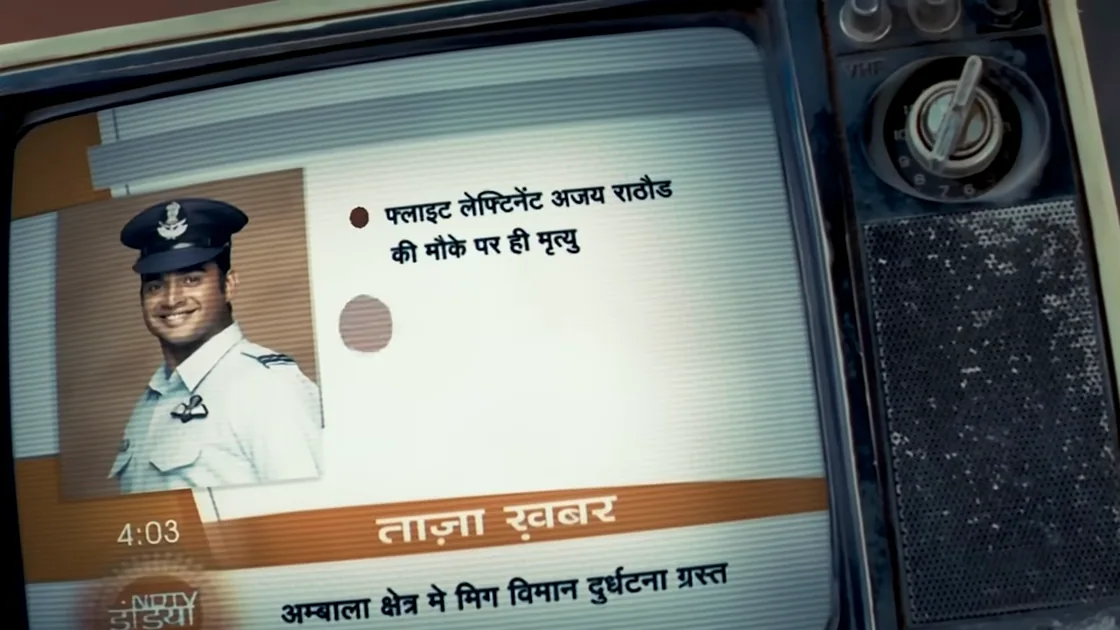
As a pilot Ajay is someone whose mother already knows how to wait. A doorbell might mean he has returned after a long absence. When the day grows late, the familiar call to come in has a perfectly ordinary family history. Lata Mangeshkar’s voice can carry the exhaustion of a long day and the refusal to imagine that this particular evening will never end. The words of a game let the mother say more than a formal lament could.
Why give the son a singing voice?
A. R. Rahman describes the choice of Lata for the mother and his own voice for the son. The remarkable permission the song grants Ajay is the ability to answer from the other world. Listen to how he tries to tell his mother what the place is like. There’s wonder and reassurance in the description. There’s also something familiar about a child who gives you a long account of his surroundings when the direct answer might hurt you.
Watch from 6:25 ↗The turn in the road and the uniform at the door
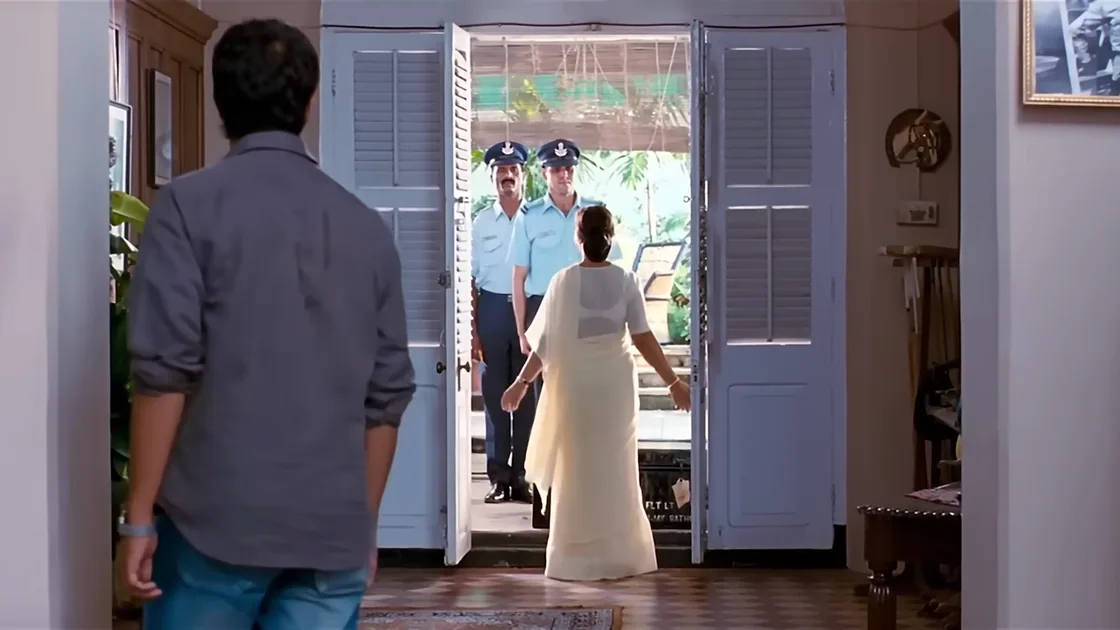
She looks towards the turn from which she has seen Ajay approach before. Later she opens the door to an officer. Look at the small step she takes towards the uniform before she recognises who is wearing it. Then she sees the box. She has received another such delivery in her life, for her husband. The film allows hope, recognition and memory to pass through one body in the time it takes to open a door.
What Ajay leaves out of paradise
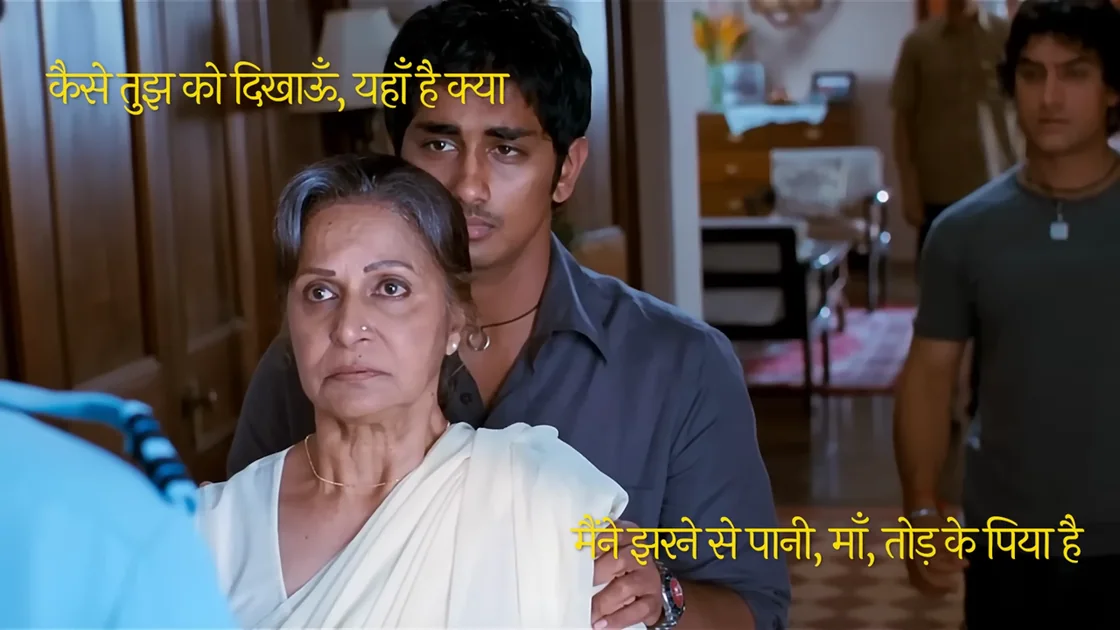
The son has water, sunlight and shade. Prasoon Joshi’s imagery gives him a whole world he might describe to his mother. Yet all that abundance cannot put her there beside him. Think of a bird ranging over an enormous sky and needing its nest when evening comes. The person who has spent the song inviting her child home is also the one thing missing from the home he describes.
The last flight is in the sargam
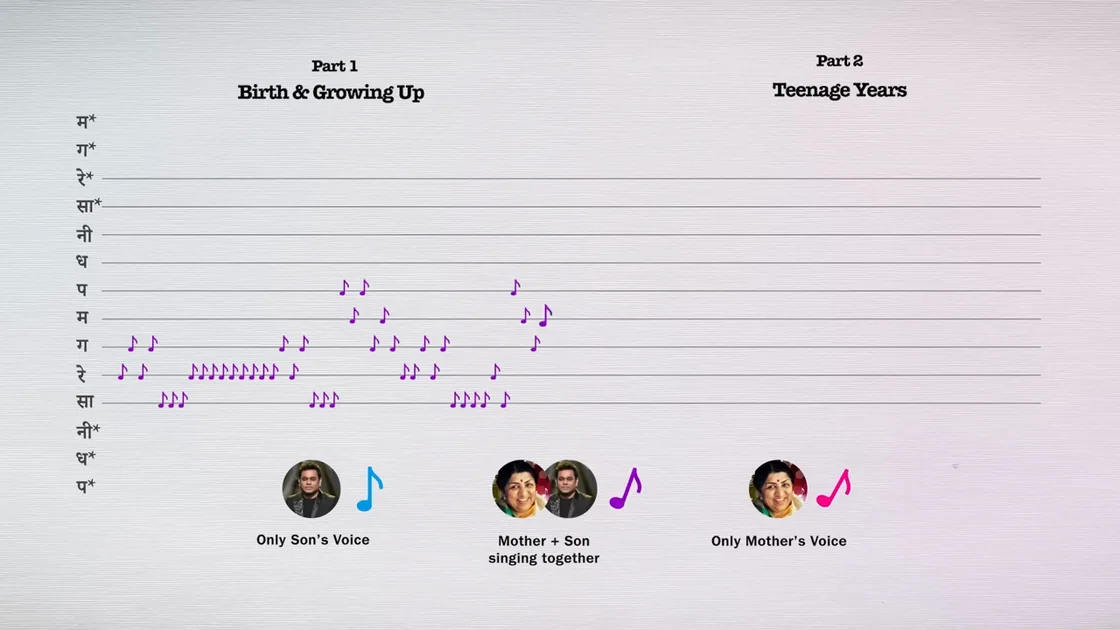
Stay after the words have run out. The two voices move together at first. Then the son’s line rises, comes back, finds the mother’s line again. You can hear a child going away to school and coming home, then venturing farther. One last rise can now mean something those earlier ones did not. The song gives a pilot a final flight made entirely of notes, and a mother who has learned every one of his previous returns.
 Original In Other Words videoWatch the complete Lukka Chuppi analysis ↗